
Key Takeaways
- Giving up driving is an emotional milestone, not just a practical one.
- Not owning a car can free up real money for other transportation needs.
- Senior living communities often provide transportation as part of everyday life.
- A full social life is absolutely possible without a car.
- Starting the conversation with encouragement makes a meaningful difference.
When the Keys Come Home to Stay
For your loved one, handing over the car keys can feel like losing a piece of themselves. Driving isn’t just about getting from point A to point B. For many older adults, it represents decades of self-reliance, spontaneous trips, and the quiet comfort of going wherever they want, whenever they want.
The good news is that giving up driving doesn’t have to mean giving up independence. With the right support, transportation options, and community around them, your loved one can stay active, connected, and engaged in life on their own terms. Bethany Village is one community designed with exactly this kind of support in mind, offering everything from independent living to assisted living and memory care in one welcoming place.
The Financial Upside of Not Owning a Car
Where the Savings Add Up
Car ownership comes with a long list of ongoing costs. Insurance premiums, gas, oil changes, tires, and unexpected repairs can quietly drain a budget over time. When your loved one steps away from owning a car, those costs stop, and that money can go toward something more useful, like private transportation or personal outings.
Think about what a monthly car insurance payment alone could cover. That’s a rideshare account, a few personal transportation bookings, or even a contribution toward a senior living community with transportation options built in.
Other Day-to-Day Benefits
Beyond the savings, there are everyday perks worth noting. No more navigating icy roads or hunting for parking during busy shopping seasons. No annual trips to renew a license or registration. For many older adults, these small stressors quietly add up, and letting them go can bring a surprising sense of relief. Stepping away from driving at the right time can actually reduce stress and improve overall well-being.
Transportation Options That Support Senior Living
Community Transportation at the Ready
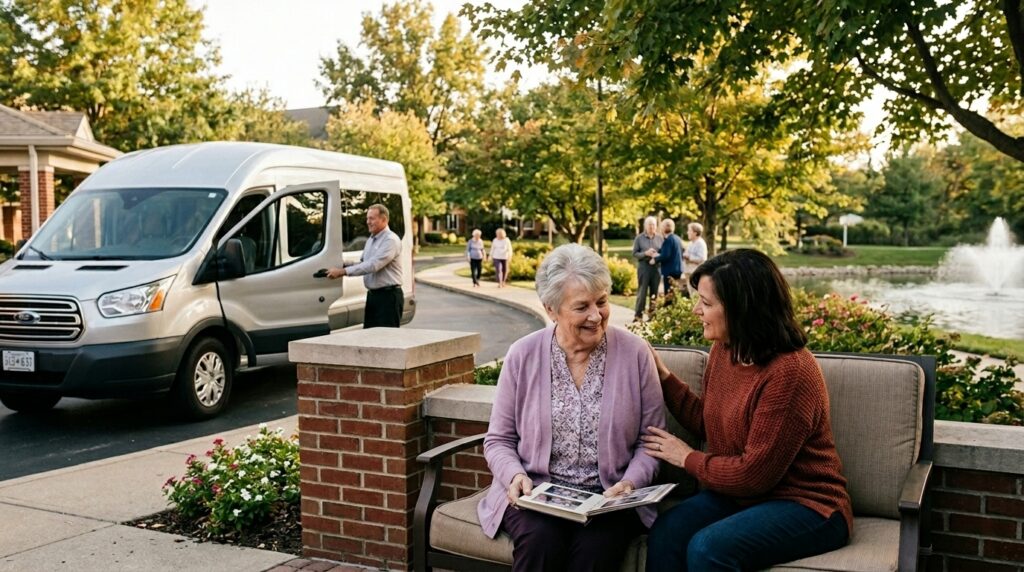
One of the most overlooked advantages of senior living communities is built-in transportation. Many independent living communities offer scheduled rides to grocery stores, shopping centers, restaurants, and other outings as part of everyday life. Residents simply sign up and go with no planning logistics required on your end.
For trips that fall outside the schedule, private transportation options are often available. This gives your loved one the freedom to handle personal appointments or spontaneous outings without depending on a family member every single time.
Family as a Transportation Support
If relatives live nearby, regular driving support can be a meaningful way to stay connected. A Saturday morning errand run paired with lunch together becomes more than just a ride. It becomes something to look forward to every week. These moments of connection can be just as valuable as the errand itself.
The key is building a rhythm that works for everyone. When rides are planned in advance rather than at the last minute, it’s easier for family members to show up consistently without feeling overwhelmed. For caregivers managing a lot at once, self-care strategies can help you stay energized and present for your loved one.
How to Keep a Full Social Life Without a Car
A car-free life does not have to mean a quiet one. With a little advance planning, your loved one can keep a genuinely full calendar. Independent living communities make this especially easy by offering activities, events, and social opportunities right on the grounds, no transportation required.
From fitness classes and walking paths to dining with friends and library hours, daily life in a senior living community is designed to keep residents engaged. Social connection doesn’t require a car when the community itself becomes the destination. Friendships form, routines develop, and the days fill up naturally. Staying socially connected is one of the most meaningful ways to support your loved one’s health and happiness at this stage of life.
How to Start the Conversation with Your Loved One
Tips for a Supportive Talk

How you open this conversation matters more than you might expect. Lead with encouragement rather than a list of concerns. Instead of focusing on what driving was, talk about what comes next, like the freedom from car costs, the ease of having rides already arranged, and the lifestyle that’s waiting for them. These conversation tips can help you approach the topic with patience and care.
Your loved one is more likely to stay open to the conversation when they feel heard rather than managed. Keep the tone warm, honest, and forward-looking. Acknowledge that this is a real adjustment, and let them know you’re walking through it together.
Next Steps After the Talk
Once the conversation has happened, the practical next steps can begin. Start exploring independent living or assisted living options in your area to see what transportation and lifestyle support looks like day to day. If memory care is part of the picture, those communities often have additional layers of support built in for families navigating complex situations.
Take the Next Step with Bethany Village
Bethany Village in Dayton, Ohio, offers a warm, engaged community with transportation, activities, and care options, including independent living, assisted living, memory care, rehab and nursing, all in one place. The transition away from driving doesn’t have to feel like a loss.
With the right community around your loved one, it can open the door to something genuinely good. Schedule a visit to learn more about how we encourage independence within our community.