

Key Takeaways
- The right memory care community should match your loved one’s health needs, routines, personality, and interests.
- Ask how team members are prepared to support people living with dementia and how care plans change over time.
- Look closely at safety features, daily support, activities, dining, and the overall environment.
- A memory care tour gives you an opportunity to ask specific questions and see how the community approaches daily life.
- Review costs, included services, additional fees, and availability before comparing your options.
- Families considering memory care in Dayton, Ohio, can visit communities in person to get a clearer sense of where their loved one may feel comfortable.
How to Find a Memory Care Community That Fits
You’ve noticed the missed medications, the repeated phone calls, the stove left on. Caring for a parent with memory loss at home can stretch a family thin, and the search for help often starts with a long list of communities and very little clarity. Comparing memory care communities can feel like a major decision, especially when you’re trying to balance health needs with the routines and preferences that make your loved one who they are, but your family isn’t alone.
Finding the right memory care community means looking closely at daily care, safety, activities, team experience, and the overall environment. If you’re considering memory care in Dayton, Ohio, visiting communities and asking detailed questions can help you understand what everyday life would actually look like. The goal is to find a setting that can meet your loved one’s needs while respecting their abilities, interests, and familiar routines.
What to Look for in a Memory Care Community
A community may look inviting during a tour, but the details of everyday care matter just as much as the surroundings. Consider how each community would support your loved one now, as well as how it could respond if their needs change.
Daily Care and Health Support
Start with the areas where your loved one needs support today, such as bathing, dressing, grooming, mobility, or medication management. Ask how team members learn each person’s routines and how they respond when someone needs additional assistance. It’s also helpful to understand how health concerns are monitored and what support is available overnight.
Safety and Security
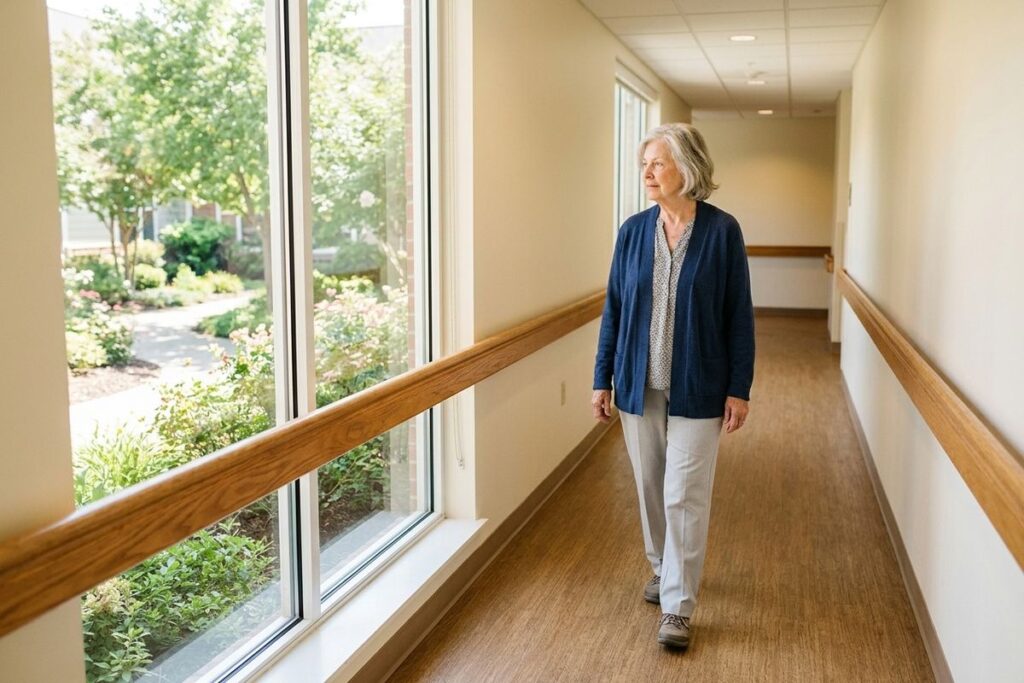
Memory care communities should balance safety with opportunities for residents to move through their surroundings comfortably. During a tour, look at entrances, outdoor areas, hallways, lighting, and emergency response systems, and ask how the community responds to wandering or other dementia-related safety concerns. A well-planned environment should make everyday spaces easier to navigate without feeling unnecessarily restrictive.
Engaging Activities and Programs
Daily activities in memory care can provide structure while giving residents opportunities to socialize, move, create, and spend time doing things they like. Ask about programs such as music, art, gardening, exercise, games, or sensory activities, as well as how activities are adapted for different interests and abilities. A varied community events calendar also gives residents choices rather than expecting everyone to participate in the same way.
Personal Preferences and Familiar Comforts
Your loved one’s preferences still matter when they move to memory care. Think about whether they prefer quiet mornings or a busy social calendar, which foods they like, what hobbies are meaningful to them, and whether faith is an important part of their routine. You can also ask about suite options, personal belongings, spiritual services, and other ways the community helps residents maintain familiar parts of daily life.
Questions to Ask During a Memory Care Tour
A tour is your opportunity to move beyond brochures and learn how a community approaches dementia care from day to day. Bring questions with you, take notes, and ask for clarification when policies or services differ between communities.
Consider asking:
- How are team members prepared to support people living with dementia?
- How do you create and update each resident’s care plan?
- How do you communicate with families about changes in health, behavior, or care needs?
- What safety measures are in place throughout the community?
- How are activities adapted to residents’ interests, abilities, and changing needs?
- What does the monthly fee include, and which services may involve additional costs?
- What happens if my loved one needs more support in the future?
You can also ask about current availability, anticipated fee changes, and any waiting list before making a decision. Clear answers can make it easier to compare communities based on the factors that matter most to your family.
Choose Memory Care With Confidence
Choosing memory care isn’t about finding a community with the longest list of amenities. Your loved one’s health needs, personality, routines, interests, and comfort should remain at the center of the decision. Asking specific questions and visiting communities in person can help you see how each option approaches the details that will shape everyday life.
Bethany Village has served older adults and families in the Dayton area since 1946. As a faith-based nonprofit community in Centerville, Bethany Village welcomes people of all faiths and brings its tradition of Faithful Caring to memory support and other health care services. The 100-acre campus also offers a continuum of care, so additional support is available within a familiar community if needs change over time. Schedule a tour of Bethany Village today to learn more about memory care in Centerville, Ohio.