
Key Takeaways

  • Assisted living provides a supportive environment with staff available around the clock to offer assistance and peace of mind.
  • Chef-prepared meals focus on balanced nutrition and can be tailored to accommodate personal dietary needs.
  • Residents can enjoy a full calendar of social events and activities, which helps foster new friendships and a sense of community.
  • Personalized care includes help with daily tasks and medication management, supporting both independence and well-being.

Discover What an Assisted Living Community Offers

You want your loved one to be safe, happy, and well-cared for as they age. As their needs change, you may find yourself wondering what the right level of support is. Communities like Bethany Village help families find the right balance between a loved one’s desire for independence and their growing need for assistance.

An assisted living community can provide that ideal balance by offering personalized support in a vibrant social setting. This lifestyle option combines the privacy of a personal home with the benefits of on-site care, nutritious dining, and a warm community of peers.

A Safe Environment and Personalized Support

Peace of Mind for Your Family

One of the primary comforts of an assisted living community is the secure setting it provides. With supportive staff available 24/7, you can feel at ease knowing help is always close if your loved one needs it. This consistent presence provides security for residents and reassurance for your family. Homes are also thoughtfully designed for accessibility, with features that make daily navigation simpler for older adults.

Help with Daily Activities

Personalized support is at the heart of assisted living. Compassionate team members can help with daily activities such as dressing, bathing, and grooming. This respectful assistance helps your family member maintain dignity while getting the support they need. It also allows them to save their energy for hobbies and social events. Help with medication management is another key benefit that simplifies routines and supports their overall wellness.

Access to Further Care

Many senior living communities offer a continuum of care. If your loved one’s needs evolve, they may have access to other services like memory care, skilled nursing, or short-term rehab without having to move. This structure provides stability in a familiar environment, which is reassuring for residents and their families.

A Focus on Health and Social Well-Being

Freedom from Home Maintenance

Another significant benefit is the freedom from the demands of homeownership. You and your loved one no longer need to worry about yard work, snow removal, or unexpected repairs. Housekeeping and laundry services also handle routine chores, freeing up time for a more relaxed and enjoyable lifestyle.

Delicious and Nutritious Dining

A focus on good nutrition is important for overall health. Residents can enjoy delicious, chef-prepared meals every day in a shared dining room. This experience removes the daily stress of grocery shopping and cooking, and the social atmosphere turns mealtime into a pleasant event. Menus are created with balanced nutrition in mind, and the dining team can accommodate most personal dietary needs.

Opportunities for Connection

Staying socially active is a large part of a fulfilling life. A vibrant community offers many chances to connect with others and pursue interests. A full calendar of events might include fitness classes, creative arts, book clubs, spiritual services, and social gatherings. These activities make it easy for your loved one to build new friendships and feel part of a lively community.

A Community of Peers

Shared spaces like libraries, walking paths, and comfortable lounges encourage spontaneous social connection. Your family member will have the chance to be around people in a similar life stage, sharing stories and experiences. This peer companionship can reduce feelings of isolation and enrich daily life by fostering a genuine sense of belonging.

Find the Right Balance at Bethany Village

Choosing the right living situation for a family member is a significant decision. An assisted living community offers a unique combination of independence, support, and social engagement. This type of senior living is designed to enhance your loved one’s quality of life.

For families in the Dayton area, Bethany Village provides a supportive and welcoming environment where older adults can thrive. Explore the approach to assisted living that can support your loved one’s well-being and bring your family peace of mind. Contact our team to schedule a visit to our community.


Key Takeaways

  • Assisted living provides support with daily activities, while skilled nursing offers round-the-clock medical care.
  • Every community has unique services and amenities, so it is helpful to compare different options.
  • Couples with different care needs can often live together in an assisted living apartment.
  • Many communities welcome pets, but you should always ask about specific policies.
  • Residents in assisted living enjoy an active and social lifestyle with many opportunities for friendship and engagement.

Important Information About Assisted Living

When you start exploring care options for a family member, the different terms and levels of support can seem confusing. You want to find a solution that respects their independence while also providing the right amount of help, which is the focus at Bethany Village. Navigating this journey means understanding what each type of senior living community offers.

This knowledge can help you make a thoughtful decision that fits your loved one’s unique situation. Assisted living offers personalized support with daily tasks in a residential setting, allowing older adults to maintain their independence while receiving the help they need. It bridges the gap for those who can live on their own but may need a hand with a few things.

Assisted Living and Skilled Nursing Are Not the Same

One of the most common points of confusion is the difference between assisted living and skilled nursing. While both provide support, they serve very different needs. Understanding this distinction can help you narrow down your search for the right care.

Assisted living focuses on helping with activities of daily living. This can include reminders to take medication, assistance with dressing and grooming, or meal preparation. The goal is to support an independent lifestyle in a private apartment home. Skilled nursing, on the other hand, provides a higher level of medical attention from licensed health professionals, including for short-term rehab after a hospital stay.

Every Assisted Living Community Is Unique

Just as every person is different, so is every community. The environment, services, and culture can vary greatly from one place to another. Finding the right fit for your family member often comes down to these details. It’s a good idea to look closely at what each community provides to match their personality and preferences.

Compare Services and Amenities

When you explore communities, pay attention to the lifestyle they offer. Does your loved one enjoy fine dining, or would they prefer more casual options? A tour can give you a feel for the atmosphere. You can also look for specific amenities that are important to your family member, such as:

Ask About Levels of Care

Care in assisted living is not a one-size-fits-all solution. It is tailored to the individual. One person might only need help with housekeeping and meals, while another may benefit from more hands-on support. Some communities also offer specialized memory care programs designed for those with Alzheimer’s or other forms of dementia.

A Supportive Option for Couples

A common concern for couples is the possibility of being separated if one partner needs more care than the other. Assisted living can be an excellent option that allows them to stay together. Many communities offer apartment suites spacious enough for two people to live comfortably.

This arrangement allows each person to receive the specific level of support they need while sharing a home. For example, one partner might live more independently while the other receives assisted living services. It provides a sense of security and keeps them connected in the same environment.

Many Communities Welcome Pets

For many older adults, a pet is a cherished member of the family. The good news is that numerous senior living communities recognize the joy and companionship pets bring. If your loved one has a cat or a small dog, you will likely find a community that welcomes them.

It’s always a good idea to ask about the specific pet policies, as they can differ. Some communities may have size or breed considerations. Others might host pet therapy events, allowing all residents to enjoy the positive presence of animals.

Residents Enjoy an Active Lifestyle

A move to an assisted living community can open the door to new friendships and interests. These communities are often vibrant hubs of activity, with full calendars of social events, classes, and outings. It provides a built-in social network that can be very fulfilling.

Residents can choose how involved they want to be. They might join a book club, take an art class, or attend a weekly social hour. These opportunities make it easy to stay engaged and connect with others who share similar interests.

Find the Right Support for Your Family

Choosing an assisted living community is a significant decision that can lead to a positive, enriching chapter for your loved one. By understanding the options, you can find a place that honors their independence while providing supportive care. It’s about finding a lifestyle that is right for them.

For families in the Dayton area, Bethany Village offers distinctive lifestyle options, from independent living to assisted living and memory support. You can discover a retirement experience curated for your loved one, with a wide variety of activities and opportunities for friendship. Schedule a visit with our community to learn more.

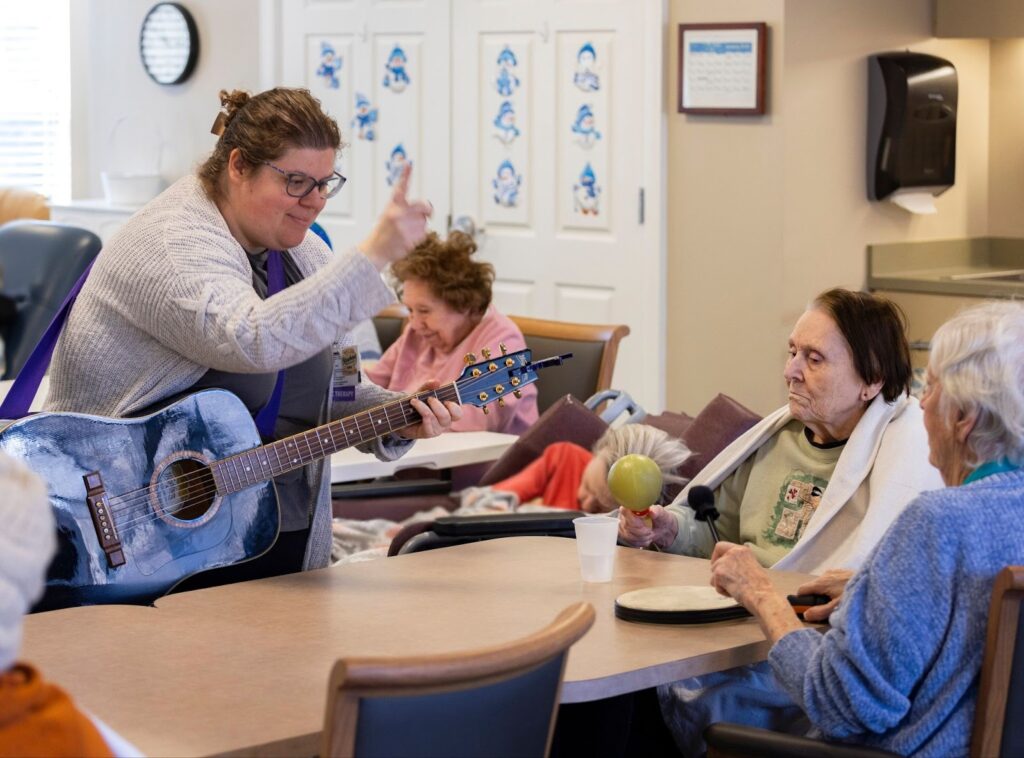
Music therapy programs are a vibrant part of life in various settings, where a board-certified music therapist guides residents through music experiences to support their health and quality of life. This can be especially meaningful in communities offering assisted living or specialized memory care. It is a recognized profession with its own practice standards, and we are proud to celebrate the professionals in this field.

Key Takeaways

  • Music therapy is a planned therapeutic process that uses music experiences such as singing, instrument play, improvisation, songwriting, movement and receptive listening to address physical, cognitive, and emotional needs through assessment, treatment and evaluation.
  • Listening to or creating music to express oneself can help reduce stress and calm feelings of anxiety in older adults.
  • It can also help with communication and cognitive function, particularly for individuals in memory care, to make choices – giving them a sense of purpose.
  • Group music therapy sessions encourage social connection and physical movement, which contribute to overall well-being.

Discovering the Power of Music

We all know the feeling of a favorite song lifting our spirits or bringing back a cherished memory. During Music Therapy Month, we recognize how music can be used in a structured way to support older adults. This approach supports well-being and addresses challenges related to aging.

What Does Music Therapy Involve?

Music therapy is more than just listening to the radio or singing along to familiar tunes. It uses specific music experiences led by a licensed professional to help individuals achieve certain therapeutic goals. This approach is tailored to meet each person’s individual needs and preferences.

A music therapist might use singing or lead a progressive muscle relaxation to help someone relax and manage stress. They could also use different rhythms as well as pitch and vocal techniques to help a person with speech difficulties communicate. The focus is always on using music to improve a person’s quality of life.

How Music Supports Mental and Emotional Health

Reduces Feelings of Stress

Some older adults experience significant stress and tension. Listening to calming music can help slow a fast heart rate. It can also help lower levels of stress hormones in the body.

Additionally, in a music therapy program, a music therapist might select resident-preferred songs with gentle rhythms or soundscapes. The lyrics and themes can also be chosen to help people feel more relaxed and verbally process experiences. This can create a peaceful and soothing atmosphere.

Improves Cognitive Skills

Music therapy is often part of a comprehensive care plan for individuals requiring memory care. It may help retain speech skills. Sometimes, music can even encourage a nonverbal person to hum or sing along.

Research has shown that music stimulates the brain by activating multiple areas in both hemispheres, including those responsible for emotions, memory, and motor function, which can lead to increased cognitive function, emotional responses, and even physical health benefits  such as supporting blood flow.. The experience is both engaging and beneficial for residents.

How Music Encourages Physical and Social Activity

Inspires Movement

Upbeat music can motivate older adults to engage in physical activity. This might mean dancing, clapping their hands, or just tapping their toes to the beat. Structured movement and utilizing handheld instruments are positive forms of utilizing gross and fine motor physical activity. Instruments such as drums, tambourines and shakers provide opportunities for participants to make their own music and express themselves as well as feeling grounded and vibrotactile stimulation.  It is a fun and interactive way to stay mobile.

Increases Social Connections

Music has a natural way of bringing people together. During group music therapy, older adults can connect over a shared interest in music or life experiences. This experience often leads to new and lasting friendships.

The social side of music therapy helps reduce feelings of loneliness or isolation. It provides a sense of community and belonging. This is a crucial aspect of well-being in any senior living environment.

Music Therapy Across Different Levels of Care

Music therapy is adaptable and offers support in many different living situations. For individuals in independent living or assisted living, it can be a great way to stay social and engaged. It can also serve as a comforting presence for those who need more support.

In communities offering short-term rehab or skilled nursing, music can help people manage discomfort and identify coping skills. It can also motivate them during other forms of therapy. For those who require compassionate support, music can offer a profound sense of calm and normalization for residents and their loved ones.

Learn More About Supportive Programs at Bethany Village

Enriching programs, such as music therapy, can have a profound impact on the mental, physical, and emotional well-being of older adults. Finding a community that offers a variety of engaging activities is a high priority for many families. At Bethany Village, we offer these programs to foster a vibrant and supportive atmosphere that enables individuals to thrive.

If you are exploring care options for a loved one, we invite you to see our community for yourself. Learning about the day-to-day life and activities available can help you in your search. We are happy to answer your questions and share what makes life here so fulfilling.

Contact us today to schedule a personal tour and learn more about our supportive lifestyle options.