

Music therapy programs are a vibrant part of life in various settings, where a board-certified music therapist guides residents through music experiences to support their health and quality of life. This can be especially meaningful in communities offering assisted living or specialized memory care. It is a recognized profession with its own practice standards, and we are proud to celebrate the professionals in this field.

Key Takeaways

  • Music therapy is a planned therapeutic process that uses music experiences such as singing, instrument play, improvisation, songwriting, movement and receptive listening to address physical, cognitive, and emotional needs through assessment, treatment and evaluation.
  • Listening to or creating music to express oneself can help reduce stress and calm feelings of anxiety in older adults.
  • It can also help with communication and cognitive function, particularly for individuals in memory care, to make choices – giving them a sense of purpose.
  • Group music therapy sessions encourage social connection and physical movement, which contribute to overall well-being.

Discovering the Power of Music

We all know the feeling of a favorite song lifting our spirits or bringing back a cherished memory. During Music Therapy Month, we recognize how music can be used in a structured way to support older adults. This approach supports well-being and addresses challenges related to aging.

What Does Music Therapy Involve?

Music therapy is more than just listening to the radio or singing along to familiar tunes. It uses specific music experiences led by a licensed professional to help individuals achieve certain therapeutic goals. This approach is tailored to meet each person’s individual needs and preferences.

A music therapist might use singing or lead a progressive muscle relaxation to help someone relax and manage stress. They could also use different rhythms as well as pitch and vocal techniques to help a person with speech difficulties communicate. The focus is always on using music to improve a person’s quality of life.

How Music Supports Mental and Emotional Health

Reduces Feelings of Stress

Some older adults experience significant stress and tension. Listening to calming music can help slow a fast heart rate. It can also help lower levels of stress hormones in the body.

Additionally, in a music therapy program, a music therapist might select resident-preferred songs with gentle rhythms or soundscapes. The lyrics and themes can also be chosen to help people feel more relaxed and verbally process experiences. This can create a peaceful and soothing atmosphere.

Improves Cognitive Skills

Music therapy is often part of a comprehensive care plan for individuals requiring memory care. It may help retain speech skills. Sometimes, music can even encourage a nonverbal person to hum or sing along.

Research has shown that music stimulates the brain by activating multiple areas in both hemispheres, including those responsible for emotions, memory, and motor function, which can lead to increased cognitive function, emotional responses, and even physical health benefits  such as supporting blood flow.. The experience is both engaging and beneficial for residents.

How Music Encourages Physical and Social Activity
Inspires Movement

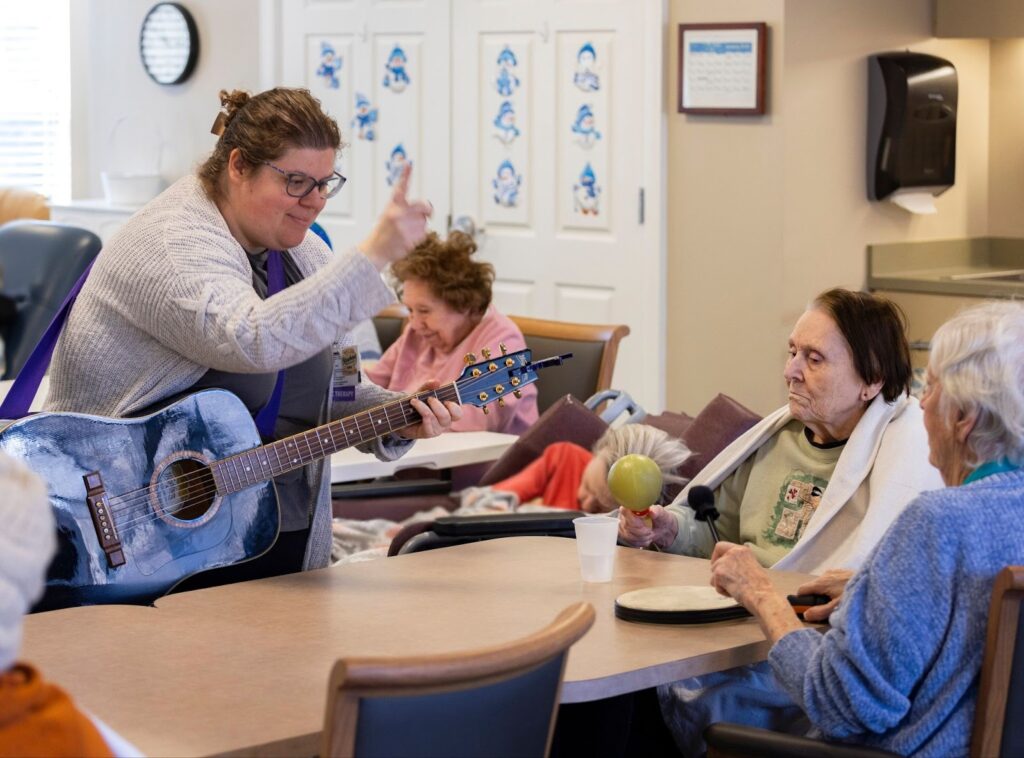
Upbeat music can motivate older adults to engage in physical activity. This might mean dancing, clapping their hands, or just tapping their toes to the beat. Structured movement and utilizing handheld instruments are positive forms of utilizing gross and fine motor physical activity. Instruments such as drums, tambourines and shakers provide opportunities for participants to make their own music and express themselves as well as feeling grounded and vibrotactile stimulation.  It is a fun and interactive way to stay mobile.

Increases Social Connections

Music has a natural way of bringing people together. During group music therapy, older adults can connect over a shared interest in music or life experiences. This experience often leads to new and lasting friendships.

The social side of music therapy helps reduce feelings of loneliness or isolation. It provides a sense of community and belonging. This is a crucial aspect of well-being in any senior living environment.

Music Therapy Across Different Levels of Care

Music therapy is adaptable and offers support in many different living situations. For individuals in independent living or assisted living, it can be a great way to stay social and engaged. It can also serve as a comforting presence for those who need more support.

In communities offering short-term rehab or skilled nursing, music can help people manage discomfort and identify coping skills. It can also motivate them during other forms of therapy. For those who require compassionate support, music can offer a profound sense of calm and normalization for residents and their loved ones.

Learn More About Supportive Programs at Bethany Village

Enriching programs, such as music therapy, can have a profound impact on the mental, physical, and emotional well-being of older adults. Finding a community that offers a variety of engaging activities is a high priority for many families. At Bethany Village, we offer these programs to foster a vibrant and supportive atmosphere that enables individuals to thrive.

If you are exploring care options for a loved one, we invite you to see our community for yourself. Learning about the day-to-day life and activities available can help you in your search. We are happy to answer your questions and share what makes life here so fulfilling.

Contact us today to schedule a personal tour and learn more about our supportive lifestyle options.

 

As winter settles in, staying well becomes a top priority. Colder weather often means less time outdoors, changes in routine, and increased exposure to seasonal illnesses. This is when a proper diet becomes so important for older adults, because it supports energy levels, strength, and overall health throughout the season.

Five immune-boosting foods for seniors include:

  • Citrus fruits
  • Eggs
  • Blueberries
  • Ginger
  • Chicken soup

Key Takeaways

  • Winter can disrupt daily routines for older adults, making nutrition an important part of overall wellness.
  • Certain foods, including citrus fruits, eggs, blueberries, ginger, and chicken soup, provide nutrients that support the body’s natural defenses.
  • Consistent, balanced eating habits matter more than focusing on any single food or ingredient.
  • A well-rounded diet supports energy levels, strength, and long-term health throughout the colder months.
  • Wellness is supported by more than nutrition alone, including movement, routine, and access to supportive services.

Why Nutritious Foods Matter During Colder Months

Focusing on nutrition is part of a broader approach to wellness that supports independence and daily comfort.  However, colder months often change daily habits, from activity levels to eating patterns. For older adults, maintaining steady nutrition during this time supports energy, strength, and resilience. Regular meals that include a variety of nutrients help the body function at its best, even when routines shift.

Nourishing Foods to Support Your Immune System

Certain foods are especially helpful during winter because they provide nutrients that support the body’s natural defenses. These ingredients are easy to find, simple to prepare, and versatile enough to enjoy in many meals. Adding them regularly can help support wellness throughout the colder months.

Citrus Fruits

Citrus fruits like oranges, grapefruits, and lemons are known for their vitamin C content, which supports immune function. They also help with hydration, which can be harder to maintain during winter. Citrus fruits are easy to enjoy as snacks, in salads, or added to warm beverages, and their bright flavor makes meals feel fresher when seasonal options are limited.

Eggs

Eggs provide high-quality protein, which helps support muscle strength and overall health. They’re also a natural source of vitamin D, a nutrient many older adults lack during winter due to reduced sunlight. And because eggs are easy to prepare, their versatility makes them a reliable staple for meals at any time of day.

Blueberries

Blueberries contain antioxidants that support overall wellness and help protect cells from everyday stress. They’re easy to add to oatmeal, yogurt, or smoothies, and their frozen variant can be found year-round. This makes them a convenient option for adding nutrients without changing meal routines.

Ginger

Ginger is known for its anti-inflammatory properties and its ability to support digestion. It also provides a warming quality that many people find comforting in colder months. It can be added to soups, teas, or cooked dishes for flavor and balance.

Chicken Soup

Chicken soup offers hydration, protein, and warmth, all of which are helpful during winter. It’s easy to eat when appetite is lower, and it provides gentle nourishment. The combination of broth, vegetables, and protein supports overall health, so this meal remains a dependable option.

The Importance of a Consistent and Well-Balanced Diet

While individual foods are helpful, consistency matters most. A well-balanced diet that includes fruits, vegetables, lean proteins, whole grains, and healthy fats supports long-term wellness. Regular meals help maintain energy levels and reduce the risk of nutritional gaps.

Rather than focusing on one ingredient, building steady eating habits creates a stronger foundation for health. This approach supports daily comfort and helps older adults maintain routines that feel familiar and manageable.

How Senior Living Options Support Healthy Eating

Planning, shopping, and preparing meals every day can become a challenge. This is where a senior living community can provide vital support by offering regular, well-planned dining options. This consistency makes it easier for residents to enjoy balanced meals without the stress of planning or cooking.

How Senior Living Supports Wellness Year-Round

Wellness is best supported by consistency, balance, and routine. So, senior living communities take a holistic approach to nutrition. Rather than focusing on individual meals, they create an environment where healthy eating is built into everyday life.

Communities like ours offer:

  • Fitness and movement programs that support strength, balance, and mobility
  • On-site therapy services that help older adultss maintain physical function
  • Daily routines that promote structure and reduce stress
  • Access to supportive care services as needs change
  • Community amenities that encourage activity and connection
  • Thoughtfully planned dining that complements an active lifestyle

Together, these elements create an environment where wellness is supported throughout the year, not just during the winter months.

Discover a Lifestyle Focused on Wellness

A satisfying meal is one of life’s simple pleasures. At Bethany Village, we believe that delicious food and good nutrition are central to a fulfilling lifestyle. Our culinary team is dedicated to creating varied and appealing menus that nourish the body and spirit.

Our community helps residents enjoy meals that are both comforting and delicious. To learn more about how we support healthy living through every season, schedule a visit today!

A number of people are choosing to live in retirement communities today. These residences range from high-end hotel types to basic apartments, with a wide variation in cost and facilities. Some are for those who don’t need many services, and others cater to seniors with specific requirements.

If you or a loved one is looking for a catered retirement experience, several things need consideration. Many start by asking: What’s it like to live in a retirement community? Let’s answer that question by looking at the lifestyle options, amenities, and services these communities provide.

What Is a Retirement or Senior Living Community?

Statistics show more than 16%, more than one in seven Americans, are 65 and older. The numbers increase every year, with continued growth expected to reach 21.6% by 2040.

With an aging population, the demand for retirement communities has been and is on the rise. But what does a retirement community or senior living community mean or look like for a senior person?

A retirement community is a place that provides housing, healthcare, and a wide variety of activities and events. They cater to seniors who are looking for a comfortable place to retire among their peers. Independent living in retirement communities offers help to seniors who also want to live an active lifestyle. Assisted living provides extra assistance to those who need it.

Retirement communities have different living spaces to fit individual needs while maintaining some independence:

  • Cottages
  • Villas
  • Apartment homes

Different Living Options to Choose

Everyone comes to that point or age when they have to think about what sort of living arrangement best suits their needs. This is where living options offered by retirement communities come in.

Healthy seniors who move into a retirement community can take advantage of a larger social circle, the abundance of activities and hobbies to enjoy and feel part of the community. Then when the time comes, they will have an easier transition into a higher level of care.

Many retirement communities offer independent living, assisted living, and nursing care.

Independent Living

When your loved one craves independence but wants to downsize and look forward to more connection, they may be ready for independent living.

Convenient features of independent living can include the following:

  • Transportation
  • Security
  • Home maintenance
  • Technology support
  • Garage parking
  • Wellness center

Assisted Living

Assisted living offers an extra level of help and care while maintaining some independence. The balance assures seniors of their freedom and the flexibility with custom care solutions.

Memory Support

Memory support is for seniors living with dementia or Alzheimer’s disease. Memory care support for seniors includes appropriate care, safety, and enriching programs.

A group of seniors talking and drinking coffee, while a young female nurse talks with them as well

Retirement Community Lifestyle

Some seniors choose to live in a retirement community out of necessity, and others as a lifestyle choice. There are many benefits to living in a senior living community, including amenities, prepared meals, the social aspect, and healthcare when needed.

Activities

Activities and events keep seniors active, learning, and part of a community. Seniors may choose activities that would otherwise be difficult to do if living alone.

With no home maintenance to worry about, there is often plenty of time for individual choices. These can be anything from game nights to concerts, movie night, shopping trips, or hobbies.

Meals

Options for meals include in-room dining or enjoying a meal in the on-site restaurants with other residents. Residents can enjoy chef-prepared meals with diverse menu options catering to any dietary restrictions.

Amenities

There is no shortage of amenities, activities and opportunities for seniors to explore their interests. Some of these amenities can include:

  • Fitness center
  • Beauty Salon and Barbershop
  • Community gathering space
  • Movie Theater
  • Library
  • Outdoor walking paths

For a Better Life in the Golden Years

Anyone who grows old can attest that it does become harder to manage daily tasks. With that knowledge, sometimes the concern about living in a retirement community is that it likely won’t be the same as staying at home with one’s family.

Life in a retirement community is different, but it has so much more to offer a loved one. The extra time and security they gain by moving in, allows them to enjoy time with family and friends.

It is essential for a person who wants to move into a retirement community to look into the services and facilities offered to meet their needs. Schedule a visit with Bethany Village or contact us for more information about our living options.

The phrase “use it or lose it” is often used to describe the importance of improving balance, strength, and mobility as we age. While it’s natural to lose some flexibility and functionality as we get older, incorporating safe, regular movement can make a world of difference when it comes to active aging—and a senior physical therapy program is an excellent place to start.

What is physical therapy?

Physical therapists are movement experts who improve quality of life through hands-on care, patient education, and prescribed exercise. Contrary to popular belief, physical therapy is not just for those recovering from major injuries. For seniors, proactive physical therapy can help them improve their balance and strength, increase mobility, and enhance their overall fitness, all of which can allow them to maintain their independence for longer and continue doing what they love most.

Here’s a closer look at some of the many benefits of physical therapy for seniors:

#1: Prevent falls

Falls are the leading cause of both fatal and non-fatal injuries in adults over the age of 65, and one in four older Americans will experience a fall each year. Even if a fall doesn’t result in a major injury, it can cause a senior to become fearful of falling again, which may make it difficult for them to stay active and maintain the same quality of life.

Thankfully, falls can be prevented. Physical therapists use special exercises to help seniors improve their coordination, flexibility, strength, and gait. Physical therapy is also used after falls to help seniors recover and reduce their risk of future falls.

#2: Relieve and manage chronic pain naturally

According to the American Physical Therapy Association (APTA), physical therapy is recognized as a natural, safe, and effective alternative to prescription pain medication to treat chronic pain conditions. Physical therapy can help patients manage their pain while relying on lower doses or less frequent doses of medicine, or even none at all.

#3: Enhance recovery and healing

Physical therapy plays a vital role in the recovery process after a serious illness, injury, or scheduled surgery such as a joint replacement. In addition to relieving pain and discomfort, physical therapy help reduce swelling and inflammation, promote healing, and ultimately speed up recovery time.

#4: Treat the symptoms of certain health conditions

Physical therapy is also used to help address the symptoms of certain health conditions and diseases that become more common with age. Seniors are turning to physical therapy for help with specific health issues such as:

  • Arthritis — Physical therapy treatments can help reduce swelling and pain
  • Stroke — Physical therapists can help seniors recovering from a stroke regain strength and function to the affected parts of the body
  • Bladder control — Although urinary incontinence is a common problem among seniors, it doesn’t have to be an inevitable part of aging. Pelvic floor physical therapy can help seniors improve strength in certain muscles to keep symptoms at bay.
  • Parkinson’s disease — Early intervention with physical therapy can help delay the progression of severe Parkinson’s symptoms and preserve a greater level of flexibility and mobility
  • Alzheimer’s disease — Physical therapy for seniors with Alzheimer’s or other forms of dementia often involves familiar types of movement such as walking, dancing, and gardening to help them promote mobility and reduce fall risks

#5: Maintain an active, healthy lifestyle

It’s never too late to reap the health rewards of exercise, which is a key component of active aging. For seniors who have been inactive for a while and want to begin an exercise routine, physical therapy provides a safe, effective way to get started. Working one-on-one with a physical therapist can help seniors gain the mobility and confidence they need to safely progress to other physical activities such as walking, swimming, golfing, or strength and aerobics classes.

In-home or on-site physical therapy: Which is right for you?

Physical therapy can be provided in a variety of different settings. For example, seniors who wish to receive physical therapy treatments in their own home may choose at-home physical therapy services. This option is ideal for older adults who need therapy treatments a few times a week but have difficulty leaving the house.

A short-term stay in an inpatient senior rehabilitation center is often recommended for seniors who are recovering from a serious illness, surgery, or injury and need daily support and therapy treatments. Specialized senior rehabilitation facilities, like the Bethany Rehabilitation Center, were designed to help older adults focus on their recovery in a supportive, healing environment.

Located on the beautiful Bethany Village campus, the state-of-the-art Bethany Rehabilitation Center provides short-term nursing care and a full range of therapy services—including physical, occupational, and speech therapy—to help seniors recuperate and get back to doing what they love. After completing their inpatient rehab stay, many seniors choose to continue their recovery with at-home physical therapy through Graceworks at Home, which delivers Bethany Village care in the comfort of home.

If you would like to learn more about the physical therapy services provided by Graceworks at Home or the Bethany Rehabilitation Center, please give us a call at (937) 433-2110 or fill out our contact form, and we’ll be in touch with you right away.

Moving is a significant, life-changing event at any stage of life. For seniors relocating from their home into an assisted living community, the transition can be especially difficult. It’s not uncommon for seniors (and their families) to experience stress about downsizing, anxiety about leaving behind familiar surroundings and losing connections with friends, and uncertainty about life in a brand new community.

Are you wondering what you can do to make the move to assisted living as smooth as possible? Keep these five tips in mind:

#1: Give assisted living a trial run

The fear of the unknown can make the idea of moving to assisted living overwhelming for seniors and their families alike. To help everyone feel more comfortable and confident about the decision, consider arranging a temporary respite care stay in an assisted living community.

Respite care allows seniors and their families to “test the waters” and find out if a community is a good fit before making a permanent move. During their respite care stay, your loved one will meet other residents and experience all the amenities, activities, services, and support the assisted living community has to offer. Meanwhile, you and your family will get to know the community’s staff and understand what to expect when your loved one becomes a resident. In this way, respite care can be a valuable step in the process of moving to an assisted living community!

#2: Start the downsizing process early

After finding the right assisted living community for your loved one, it’s important to start the downsizing process as early as possible. Downsizing a house full of memories can be difficult physically and emotionally for everyone involved. It may take longer than you think to sort through your loved one’s belongings and help them decide what to keep, pass down to family members, or donate. A good place to start is by understanding the square footage of your loved one’s new assisted living apartment, which will help as you plan for furniture size and storage needs.

When time is of the essence, working with a professional organizer or senior move manager can help make downsizing a smoother, more seamless transition. At Bethany Village, our Transitions Coordinators are here to connect families with trusted local resources to help with every step of the moving process.

#3: Make their new space familiar and inviting

Adjusting to a new living space takes time, but including a few familiar pieces will go a long way in easing your loved one’s transition to assisted living. For example, even if your loved one needs new furniture to fit their assisted living suite, you could select familiar colors and arrange the room similarly to their previous home. Another tip is to display favorite family photos, artwork, decorative items, and mementos prominently. Paying attention to the little details can make a new, unfamiliar space feel more like home.

#4: Encourage them to get involved

As soon as your loved one becomes a resident, they’ll have endless opportunities to get involved in life enrichment activities and fun social events. Before move-in day, review the community’s calendar with your loved one and encourage them to choose one or two activities to try. Participating in community events is a great way to meet other residents who share common interests and passions.

At Bethany Village, we have dedicated social workers assigned to each family and resident to make the transition process even easier. We encourage families to meet with their social worker in advance to let them know of their loved one’s favorite hobbies and interests. This way, your loved one will have another familiar face in the community encouraging them to venture out. Before long, your loved one will be making new friends and finding new things to look forward to each week!

#5: Keep in touch

Before your loved one’s move, it’s a good idea to coordinate a schedule for family members to visit or call. Setting aside some time to check-in will help your loved one feel loved and appreciated as they get used to their new home. Once your loved one is settled in and getting involved in regular community activities, you may need to set up a new visiting schedule to fit their routine.

Be patient and stay positive!

Helping an aging loved one move to assisted living is a big life change that will come with its share of highs and lows. Don’t worry if everything doesn’t go as smoothly as you expected, especially in the first few weeks. It will get easier! Be patient, stay positive, and remember that you’re making the best decision for your loved one.

Start the senior living search

If you know your loved one needs more daily assistance, but you’re not quite sure where to start, Bethany Village has a useful tool to help families evaluate what living options might be a good fit. Use this quick 4-5 minute survey to weigh your options.

To arrange a respite care stay at Bethany Village or schedule a tour of our beautiful community, please contact us today. We’d love to hear from you and answer any questions you may have!

If you have a parent or loved one living with Alzheimer’s or another form of dementia, planning ahead and finding a memory care community is one of the best decisions you can make for their long-term health and wellbeing.

Especially in the early to mid-stages of dementia, assisted living memory care can provide priceless peace of mind for your loved one and your family. In an assisted living memory care community, residents benefit from 24-hour care, enriching activities and therapies, and gentle support, enabling them to maintain a higher level of independence and make the most of each day.

If you’re starting to search for assisted living memory care for your loved one, it’s important to understand that not all communities are alike. By asking thoughtful questions and touring your top choices, you can determine if a community is the best fit for your family.

Below are five important questions to ask when researching and touring memory care facilities:

What are your loved one’s current needs?

First, you’ll need to identify the level of care your loved one requires to determine if the memory care community can meet their needs. Talking to your loved one’s doctor can help you gain an understanding of the care they currently need and what to expect down the road.

For example, your loved one might need assistance with activities of daily living such as grooming, bathing, dressing, eating, and managing medications, but may not yet require ongoing medical attention or treatments. Choosing an assisted living memory care facility that’s part of a continuing-care retirement community will ensure that your loved one has access to the care they need now and in the future.

Do caregivers have dementia-specific training?

Ideally, you will choose a memory care community that employs highly knowledgeable, experienced staff members who understand the unique challenges of caring for individuals in each stage of dementia. Ask about the type of training staff members receive and if the community invests in ongoing education, so caregivers are always up-to-date on the best practices and latest dementia care techniques.

What amenities and features are available within the community?

Modern memory care communities offer ??a variety of amenities and comforts to make residents feel at home. As you research and tour memory care options, consider which features are most important to you and your loved one.

  • Are living spaces private or shared with other residents? A private room may feel most comfortable and familiar to your loved one.
  • How often are meals provided? Are snacks and beverages offered between meals? Are special dietary requirements accommodated?
  • Are there on-site amenities, like a movie theater, fitness center, beauty salon, and a library?
  • Are there enclosed courtyards so residents can safely enjoy the outdoors?

What types of memory therapies and activities are offered?

Memory-enhancing therapies and activities help individuals with dementia maintain dignity and preserve their sense of self. Ask about the different therapies offered by the memory care community, such as:

Music therapy, which involves listening to familiar tunes, singing along, and playing instruments like drums and tambourines to stimulate memories and boost mood.

Pet therapy, which helps to reduce stress and anxiety through interaction with therapy dogs, rabbits, birds, and other animals.

Art therapy, which prompts self-expression, communication, and reminiscence through guided art projects such as painting, drawing, and crafting.

In addition to these specific therapies, memory care communities may offer person-centered activities such as conversation-starter programs, brain games and puzzles, gardening and floral arrangement, and other entertaining activities tailored to residents’ individual interests.

What security measures are in place to protect residents?

Safety and security are absolutely crucial when choosing an assisted living memory care community because wandering, confusion, and agitation can be common among people with Alzheimer’s and dementia. You’ll want to find a well-secured community that includes intentional design elements and soothing, easy-to-navigate spaces that minimize confusion. Key features to look for include 24-hour security monitoring, secured entrances and exits, and personal alert systems so residents can quickly request help when needed. Find out what procedures the memory care community has in place to protect residents and communicate with family members in the event of an emergency.

Is it Time for Memory Care?

Choosing an assisted living memory care community for your loved one is a big decision. Many families choose to begin the search for memory care early, while their loved one is still independent, so they’re well-prepared when a higher level of care is needed. A good starting point is to take a quick senior living assessment to learn about the different options available — including Pavilion Assisted Living Memory Care at Bethany Village.

As part of Bethany Village’s continuum of care, which includes skilled nursing memory care, moving to Pavilion Assisted Living Memory Care guarantees that your loved one will be surrounded by faithful caring in every stage of their disease. More than providing a safe, secure place to live, Pavilion enhances residents’ quality of life with enriching therapies and meaningful activities offered every day.

See What Life is Like in Pavilion with a Respite Care Stay

If you’re beginning to compare assisted living memory care options, consider scheduling a short-term respite care stay at Bethany Village. During their respite care stay, your loved one will enjoy the same personal care, amenities, and support as our assisted living memory care residents while their family caregivers enjoy peace of mind and a well-deserved break.

Respite care is a wonderful opportunity for your loved one to meet our staff, interact with residents, and experience what it’s like to live in the community before calling Bethany Village home. Many families find that respite care makes the decision to transition to assisted living memory care easier for everyone!

Learn more about respite care and Pavilion Assisted Living Memory Care today. Please call us at 937-433-2110 or fill out our contact form to request more information and arrange a private tour of our beautiful community.

Feeling “young at heart” is more than just a saying. It’s a powerful mindset that can actually impact our health and wellbeing as we get older. Studies have found that seniors who feel younger than their actual age may even live longer compared with those who feel their age! By adopting healthy habits and an optimistic outlook toward the future, anyone can feel younger than their years and benefit from the power of positive aging.

What is positive aging?

Positive aging, also known as “healthy aging,” is the view that aging is a healthy, normal part of life. With the right supports, seniors can continue enjoying the activities and aspects of life that are most important to them as they grow older. Senior living communities that embrace the concept of positive aging, like Bethany Village, take a holistic approach to senior care by taking residents’ physical, mental, social, spiritual, and emotional health and wellbeing all into account rather than measuring physical health alone. In this way, senior living communities help residents not only age well, but live happier and more fulfilling lives.

What can you do to maintain a positive outlook on life and experience the power of positive aging? Here are a few important steps to take:

#1: Keep moving

Exercise is one of the best things you can do for your health — at any age. Regular physical activity is a proven way to reduce stress, maintain strength and balance, and enhance and protect brain function. Best of all, living in a senior living community makes it easy and convenient for seniors to focus on their fitness goals.

For example, Bethany Village features a state-of-the-art fitness center with free weights, treadmills, recumbent bikes and steppers, and other low-impact, easy-to-use equipment with senior fitness experts nearby to provide help when needed. Residents may also choose to participate in an array of fun, engaging group fitness classes for every level of ability. For residents who enjoy walking for exercise, Bethany Village features beautiful outdoor trails and indoor pathways that unite the entire community.

#2: Do what brings you joy

Another way to feel young at heart as you grow older is to pursue your passions and the activities that you love. One of the biggest benefits of moving into an easier-to-maintain residence in a senior living community is having more freedom to expand on your current hobbies or even take up a new one if you choose. Because residents no longer need to worry about household chores and repairs, yard work, and cooking every meal, they can spend their time on things that give them a sense of purpose and joy. From volunteering to traveling, exploring artistic abilities, joining clubs, and learning new skills, the possibilities are endless!

#3: Stay socially engaged

Living in a vibrant social environment is another secret to positive aging. Where we live can impact our wellbeing — for better or worse. For example, seniors who are socially isolated may experience poorer physical, mental, and emotional health outcomes than those who enjoy a strong support network with daily opportunities for socialization.

The desire to be actively involved in a community with people of the same age is a compelling reason for many seniors to move from a longtime home into senior living. Being surrounded by friendly neighbors and making friends who share similar interests through social activities and on-campus events can significantly improve a senior’s outlook and quality of life as they grow older.

Feel Young at Heart, No Matter Your Age!

It’s never too late to try new things, form new friendships, and feel young at heart. After all, age is just a number!

At Bethany Village, we witness the benefits of promoting positive aging every day. By providing faithful caring and safe, comfortable accommodations for every lifestyle, Bethany Village makes it possible for residents to pursue their passions, maintain close relationships, and celebrate the everyday joys that make life meaningful.

Experience the Power of Positive Aging at Bethany Village

Bethany Village promotes positive aging at every stage by offering the complete spectrum of senior care on one campus, including independent living, assisted living, memory care, skilled nursing care, and an on-campus rehabilitation center. To request more information and schedule a private tour of our senior living community, please contact us today!

With Father’s Day right around the corner, you might be wondering what type of gift to buy for your father or grandfather. It’s not always easy to shop for gifts for older loved ones—especially if they insist they don’t need anything! Still, a Father’s Day gift is a thoughtful gesture that can make your loved one feel special and appreciated. To give you some ideas, we’ve rounded up five meaningful, senior-friendly gifts to consider this Father’s Day:

#1: Books or audiobooks

Pick up a book or two by one of Dad’s favorite authors or on his favorite subjects. If your budget allows, consider an e-reader or tablet with some of his favorite reads pre-downloaded. E-books are great for seniors because the font size and lighting can be adjusted for their reading comfort. If your dad or grandfather prefers listening to books, a monthly subscription to an audiobook service makes a perfect gift!

#2: Activities, games, or puzzles

If Dad lives in a retirement community, playing cards and board games or putting together puzzles can be a fun opportunity to socialize with other residents. Surprise him with a unique game-themed gift, like a personalized deck of cards or a monthly jigsaw puzzle subscription.

#3: History-themed gifts

Is Dad a history buff? If so, he’s sure to appreciate an illustrated history book, movie, or documentary highlighting a specific period. Other history-themed gift ideas include vintage maps, collectibles, or even a personalized family tree to display.

#4: Container gardening kit

Container gardening is a great year-round hobby for all ages, especially seniors who want a low-maintenance way to grow flowers, vegetables, or herbs in a smaller space. Not only is gardening fun, but it’s also known to help reduce stress, promote relaxation, and improve mood. A container garden starter kit that includes a pot, soil, and seeds makes a thoughtful gift for Father’s Day!

#5: Photo gifts

Show Dad how much you care with a personalized photo gift featuring some of his favorite family moments. From printed photo books to custom coffee mugs, framed collages, and even digital photo frames, there are many unique keepsakes you can create using online services. You could also take the do-it-yourself route and put together a scrapbook that includes photos, postcards, or even grandkids’ artwork.

Celebrate Dad!

Finally, remember that the gift Dad will appreciate most is the gift of your presence! If possible, schedule a day to visit or arrange a phone or video call and enjoy some quality time together.

Fathers, grandfathers, great-grandfathers and father-like figures are all special at Bethany Village! We celebrate and appreciate them this Father’s Day and every day. To learn more about life at Bethany Village, please request more information today. We look forward to hearing from you!

Enjoy Life in a Continuing-Care Retirement Community

It’s only natural to delay making life-changing decisions, especially as we get older and become comfortable with our routines and way of life. That’s why, in many cases, it’s only when a health crisis or other emergency occurs that older adults and their families realize it’s time to make a change. By waiting until it’s necessary to choose a retirement community, many families find themselves in a very stressful situation where they have to make rushed decisions.

The good news is that it doesn’t have to be this way. Today’s continuing care retirement communities (CCRCs) encourage older adults to be proactive about the senior living search and consider moving to a community early—when they are still active, independent, and in good health.

If you like the idea of enjoying your retirement years to the fullest in a maintenance-free retirement community setting, here’s why you may want to make the move sooner rather than later:

#1: Expand your social circle

One of the best aspects of retirement is the freedom to spend your days how you choose, enjoying the hobbies and activities you love. However, many retirees soon find that they miss the daily interactions of their workplaces, where socialization was easy because they were always surrounded by peers. It’s common for people’s social circles to shrink as their routines change in retirement, which can lead to loneliness and isolation over time.

The opportunity to meet new people and form friendships is a compelling reason for older adults to move to senior living earlier in their retirement. Because every day offers opportunities to socialize with like-minded peers and neighbors, many residents find a greater sense of purpose and belonging than when they were living alone at home.

#2: Say goodbye to household chores and maintenance

Another major reason to move into a retirement community early is to embrace a simpler, easier lifestyle. Imagine how nice it would be to never mow the lawn, rake leaves, shovel snow, or fix a leaky faucet again! Other additional conveniences such as light housekeeping and laundry services and on-campus dining may also appeal to independent older adults who desire a more maintenance-free retirement.

#3: Take full advantage of activities and amenities

Modern continuing-care retirement communities, like Bethany Village, have a wide range of activities and amenities designed to enhance life for residents. From book and card clubs to art classes, social parties and happy hours, and more, retirement living offers a variety of experiences to suit residents’ interests. The sooner you make the move to senior living, the sooner you can get settled in and take full advantage of everything the community has to offer in your golden years.

#4: Promote healthy aging with wellness and fitness programs

When it comes to aging gracefully, lifestyle factors such as exercise, diet, and mental wellness can be just as important as genetic factors. This is why continuing care retirement communities like Bethany Village place a priority on helping residents stay healthy in mind, body, and soul so they can age well into the future. With access to on-campus fitness centers and exercise programs, nutritious dining options, and even spiritual support services, you’ll be able to shape a lifestyle that maximizes your health and helps you feel your best as you grow older.

#5: Ensure a smoother transition

Moving can be difficult at any stage of life. But when older adults wait until a health event necessitates the move from their home to a retirement community, it can make the transition even more challenging. By choosing a continuing care retirement community earlier in retirement, when you’re still active and healthy, you can take your time and ease into the process of moving.

Not only will your transition be smoother, but you’ll also give yourself (and your family) peace of mind that your health needs will be cared for no matter what the future holds. Continuing care retirement communities offer independent living, assisted living, skilled nursing, and memory care all on one campus. This enables residents to move to the next level of care as their needs change over time without leaving the comfort and familiarity of the community they call home.

It’s not too early to plan for your ideal retirement!

If the prospect of a more maintenance-free retirement lifestyle appeals to you, why wait to enjoy all the benefits and amenities a continuing care retirement community has to offer? Even if you’re not quite ready to move, getting a head start on the retirement community search can help you compare your options and make the decision that’s best for you and your family.

Are you interested in learning more about life at Bethany Village? Please contact us today. We would be delighted to speak with you and provide additional information.

There’s a widespread belief that seniors are reluctant to try new forms of technology. This isn’t necessarily true! Many older adults are willing to adopt new tech gadgets, especially if they offer them value and are designed with their needs in mind.

As the pandemic continues to shift many aspects of life online, older adults are becoming even more tech-savvy. According to an AARP tech survey, adults over 50 are adopting new technologies such as smartphones, wearable devices, and smart home technology at about the same pace as 18-49-year-olds. This has led to a greater demand for “silver tech,” or technology made specifically for seniors.

Today, let’s take a look at some of the ways emerging technology can help older adults live more active, independent, and healthier lives:

Connecting with friends and family

One of the top reasons seniors have embraced technology is to keep in touch with friends and family, no matter where they live. Especially during the pandemic, video calling is an important part of daily life for all of us!

For older adults who are less familiar with using smartphones, tablets, and computers, voice-controlled smart home assistants provide an easy and accessible way to communicate with long-distant loved ones. These devices can also be used for telehealth appointments at times when an in-person doctor visit isn’t feasible. Some devices even offer the ability for loved ones to check on senior loved ones from afar using “drop-in” video calling.

Staying entertained

Today’s handheld digital devices offer endless entertainment to help us beat boredom. From games and puzzles to music, movies, and ebooks—there’s something for everyone! For entertainment purposes, tablets are among the most popular devices because they’re lightweight and highly portable. Some tablets even have senior-friendly features to make them easier to use, such as large text and icons, sound adjustability, magnification tools, and bigger buttons.

Monitoring health and fitness activity

These days, there are many fun, easy-to-use gadgets available to help people of all ages stay physically active. For example, wearable devices like smartwatches can help you set fitness goals and keep track of your heart rate, daily steps, and overall fitness level. There are also a variety of apps that offer exercise classes on-demand, making fitness fun and motivating. One popular virtual fitness activity at Bethany Village is Wii bowling. Our residents even competed in friendly tournaments with retirement communities across the country!

Maintaining independence, safety, and security

Technology can also help enhance safety and security, which is especially important for older adults living alone. Integrating home security monitoring systems such as doorbell cameras and movement sensors provide a greater sense of security for seniors, as well as reassurance for their families. In addition, personal alert devices are more accurate and discrete than ever before. In the event of a fall or emergency, older adults can call for help with the press of a button on a small pendant or wristband. Some devices can even automatically call for assistance if a fall is detected.

If you’re concerned about an older loved one living alone, a retirement community can provide the ultimate peace of mind. Keeping residents safe and secure is always the top priority at Bethany Village. We utilize advanced technologies, including emergency call and response systems and 24/7 campus security monitoring to ensure our residents stay safe and enjoy an independent lifestyle.

As you can see, the benefits of technology for seniors are far-reaching! Best of all, new devices and gadgets are coming out all the time to help people live safer, healthier, and more independent lives. It’s well worth exploring some of these ideas to see what works for your family!