

Key Takeaways
- AI phone scams use a familiar voice to create a fake emergency and ask for money.
- Warning signs include pressure to act quickly and secretly, along with unusual requests for payment like gift cards.
- Create a family “safe word” that only you and your loved ones know to verify a caller’s identity.
- If you receive a suspicious call, hang up and call your loved one back on a number you know is theirs.
How AI Voice Scams Are Targeting Families and How to Stay Safe
New technology has made it easier than ever for scammers to sound convincing. While many tech gadgets for older adults are designed to help, some advancements can be used for harm. They can now use artificial intelligence to mimic the voice of a loved one, creating a distressing and confusing situation over the phone.
Protecting your loved ones involves creating a family plan, knowing the warning signs, and verifying any urgent requests for money. Awareness and simple preparations are your most effective tools against these scams.
Understanding the New Wave of Phone Scams
Scams that use artificial intelligence can mimic the voice of a family member in distress. These calls often create a false sense of emergency to trick people into acting without thinking. Knowing about these tactics helps everyone, whether they enjoy independent living or receive daily support through assisted living.
Understanding what makes these calls different can help you and your family feel more prepared. Here’s what to keep in mind:
- These scams use a trusted voice to build immediate credibility, unlike older scams that used a stranger’s voice.
- Simple awareness that this technology exists is a powerful defense against being caught off guard. As technology evolves, it is important for everyone to stay vigilant against potential threats.
- Staying calm and thinking clearly are important if an urgent and emotional call comes in.
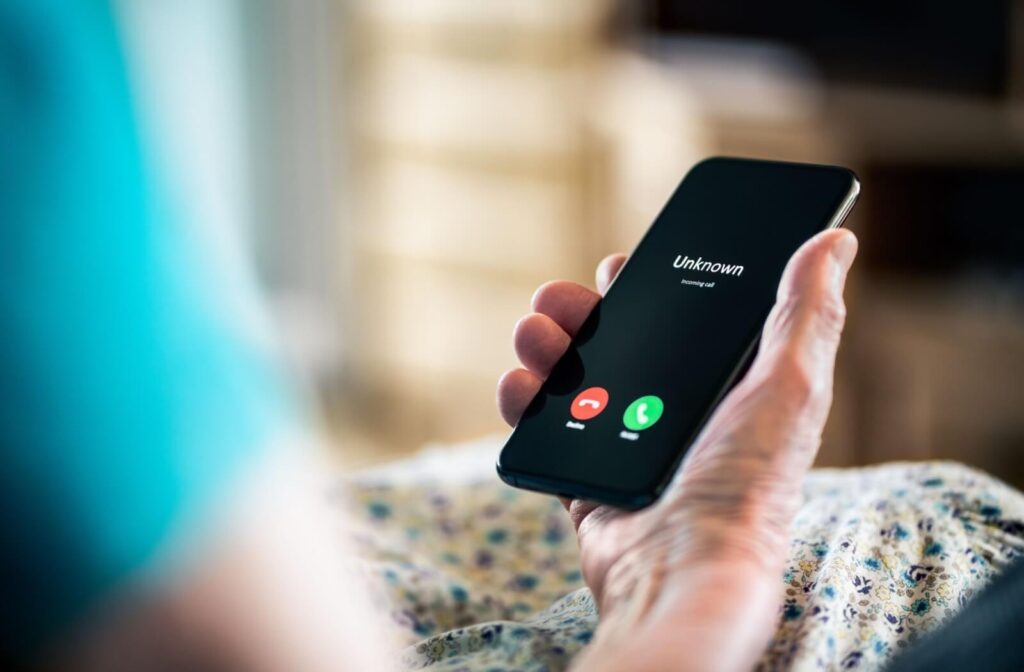
Common Warning Signs of an AI Scam Call
Recognizing the signs of a fraudulent call is the first step toward safety. Here are a few things to listen for when you or a loved one receives an unexpected, alarming phone call.
An Urgent and Unexpected Request for Money
Scammers often create a story about a car accident, a legal problem, or a medical issue. They will almost always ask for money to be sent quickly. The payment methods they request—like wire transfers or gift cards—are often difficult to trace. Learning to recognize the common patterns in these scams can prevent significant financial loss.
A Familiar Voice in an Unfamiliar Situation
The voice on the phone may sound just like your loved one, but the story they tell might seem confusing. The call quality may also be poor. This is sometimes done on purpose to hide imperfections in the AI-generated voice.
Pressure to Act Immediately and in Secret
A scammer will insist that you act now and tell you not to speak with anyone else. This tactic is used to prevent you from taking a moment to verify the story. They want to create panic so you don’t have time to think logically.
Simple and Proactive Ways to Stay Safe
Having a plan in place can make all the difference when a suspicious call arrives. These simple steps can help you and your family members avoid falling for a scam. These conversations are helpful for any older adult in your life, as open discussion is an important part of planning for a parent’s future well-being.
- Create a family safe word. Choose a unique word or phrase that only your family knows. Agree to ask for it if you ever receive a suspicious call asking for help.
- Discuss these scams openly. Talk with your loved ones about AI voice scams. Knowing these tactics exist makes it much easier to recognize them if a call happens.
- Call them back on a known number. Encourage the habit of hanging up and immediately calling back on a trusted number to confirm the story.
What to Do During and After a Suspicious Call
If you or a loved one receives a call that feels off, here are the steps to take. It’s always okay to end a call that makes you uncomfortable. You do not need to be polite to a potential scammer.
- Do not share information. Avoid giving out personal details like addresses, bank account numbers, or passwords over the phone.
- Hang up the phone. If you feel pressured or unsure, the best action is to end the conversation right away.
- Verify the story independently. After hanging up, contact your loved one directly using a phone number you know is theirs.
- Report the attempt. Report the fraudulent call to the Federal Trade Commission (FTC) to help protect others in your community.
Fostering a Safe and Supportive Environment
Ongoing communication is a powerful tool against fraud. By talking about these topics openly, you build a strong foundation of awareness and trust with your loved ones. This vigilance helps create a secure atmosphere within any senior living community.
Keeping family members informed supports their well-being and peace of mind. This is an important part of caring for individuals who may need memory care, skilled nursing, or even short-term rehab. These conversations strengthen your family’s ability to navigate challenges together.
At Bethany Village, we believe in supporting the whole family with compassion and care. If you have questions about our community, contact us to learn more or schedule a tour of our Dayton campus.