
Music therapy programs are a vibrant part of life in various settings, where a board-certified music therapist guides residents through music experiences to support their health and quality of life. This can be especially meaningful in communities offering assisted living or specialized memory care. It is a recognized profession with its own practice standards, and we are proud to celebrate the professionals in this field.
Key Takeaways
- Music therapy is a planned therapeutic process that uses music experiences such as singing, instrument play, improvisation, songwriting, movement and receptive listening to address physical, cognitive, and emotional needs through assessment, treatment and evaluation.
- Listening to or creating music to express oneself can help reduce stress and calm feelings of anxiety in older adults.
- It can also help with communication and cognitive function, particularly for individuals in memory care, to make choices – giving them a sense of purpose.
- Group music therapy sessions encourage social connection and physical movement, which contribute to overall well-being.
Discovering the Power of Music
We all know the feeling of a favorite song lifting our spirits or bringing back a cherished memory. During Music Therapy Month, we recognize how music can be used in a structured way to support older adults. This approach supports well-being and addresses challenges related to aging.
What Does Music Therapy Involve?
Music therapy is more than just listening to the radio or singing along to familiar tunes. It uses specific music experiences led by a licensed professional to help individuals achieve certain therapeutic goals. This approach is tailored to meet each person’s individual needs and preferences.
A music therapist might use singing or lead a progressive muscle relaxation to help someone relax and manage stress. They could also use different rhythms as well as pitch and vocal techniques to help a person with speech difficulties communicate. The focus is always on using music to improve a person’s quality of life.
How Music Supports Mental and Emotional Health
Reduces Feelings of Stress
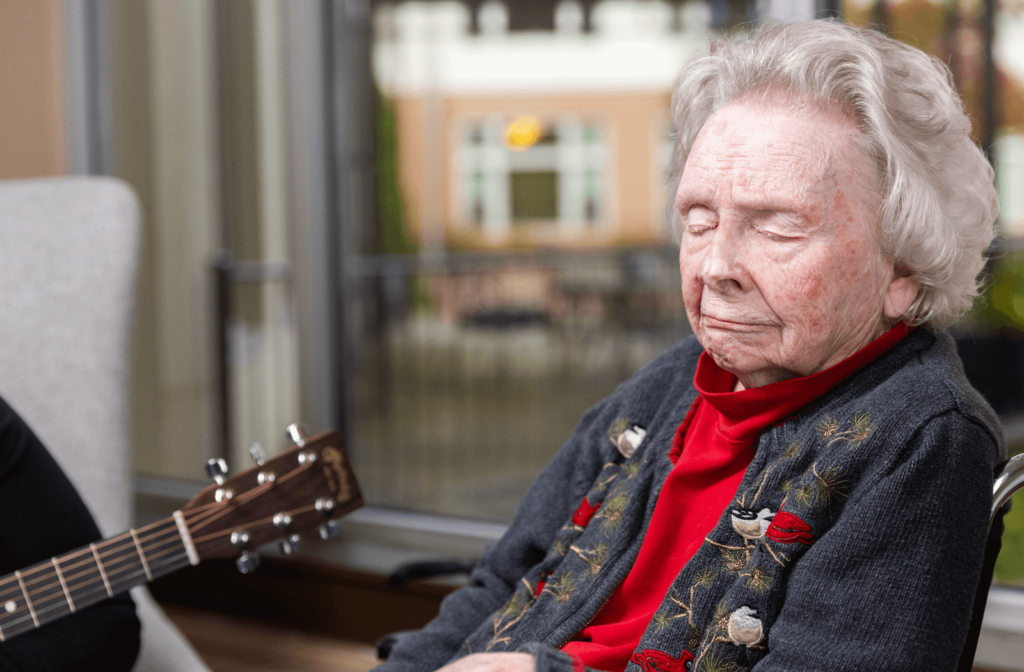
Some older adults experience significant stress and tension. Listening to calming music can help slow a fast heart rate. It can also help lower levels of stress hormones in the body.
Additionally, in a music therapy program, a music therapist might select resident-preferred songs with gentle rhythms or soundscapes. The lyrics and themes can also be chosen to help people feel more relaxed and verbally process experiences. This can create a peaceful and soothing atmosphere.
Improves Cognitive Skills
Music therapy is often part of a comprehensive care plan for individuals requiring memory care. It may help retain speech skills. Sometimes, music can even encourage a nonverbal person to hum or sing along.
Research has shown that music stimulates the brain by activating multiple areas in both hemispheres, including those responsible for emotions, memory, and motor function, which can lead to increased cognitive function, emotional responses, and even physical health benefits such as supporting blood flow.. The experience is both engaging and beneficial for residents.
How Music Encourages Physical and Social Activity
Inspires Movement
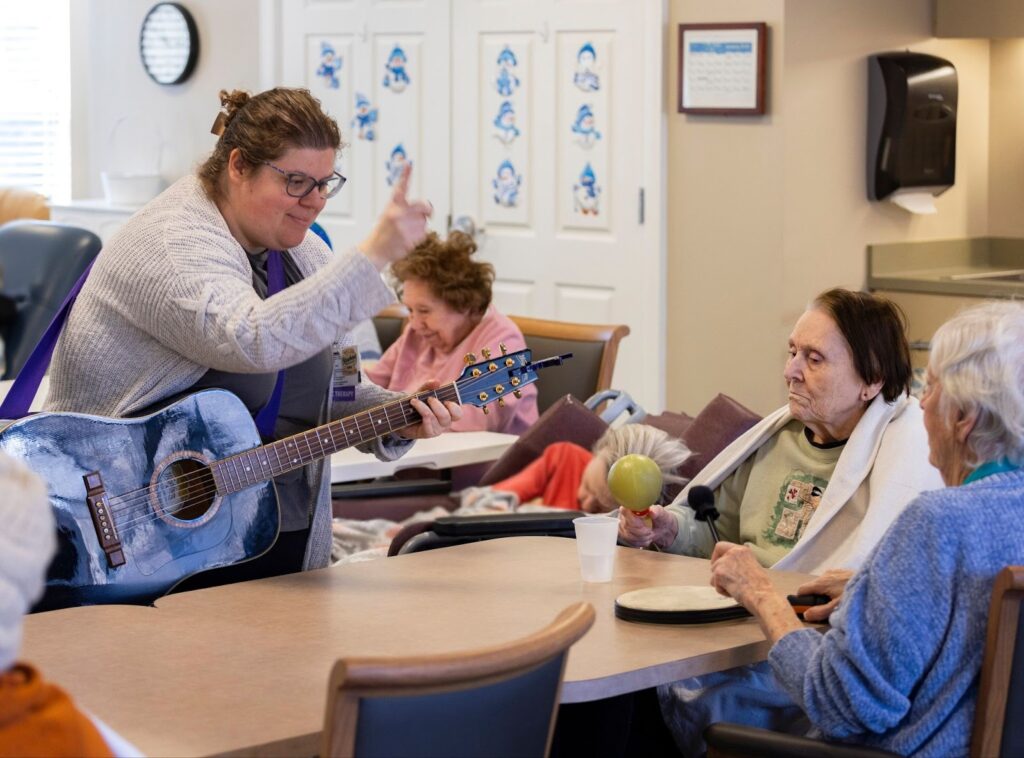
Upbeat music can motivate older adults to engage in physical activity. This might mean dancing, clapping their hands, or just tapping their toes to the beat. Structured movement and utilizing handheld instruments are positive forms of utilizing gross and fine motor physical activity. Instruments such as drums, tambourines and shakers provide opportunities for participants to make their own music and express themselves as well as feeling grounded and vibrotactile stimulation. It is a fun and interactive way to stay mobile.
Increases Social Connections
Music has a natural way of bringing people together. During group music therapy, older adults can connect over a shared interest in music or life experiences. This experience often leads to new and lasting friendships.
The social side of music therapy helps reduce feelings of loneliness or isolation. It provides a sense of community and belonging. This is a crucial aspect of well-being in any senior living environment.
Music Therapy Across Different Levels of Care
Music therapy is adaptable and offers support in many different living situations. For individuals in independent living or assisted living, it can be a great way to stay social and engaged. It can also serve as a comforting presence for those who need more support.
In communities offering short-term rehab or skilled nursing, music can help people manage discomfort and identify coping skills. It can also motivate them during other forms of therapy. For those who require compassionate support, music can offer a profound sense of calm and normalization for residents and their loved ones.
Learn More About Supportive Programs at Bethany Village
Enriching programs, such as music therapy, can have a profound impact on the mental, physical, and emotional well-being of older adults. Finding a community that offers a variety of engaging activities is a high priority for many families. At Bethany Village, we offer these programs to foster a vibrant and supportive atmosphere that enables individuals to thrive.
If you are exploring care options for a loved one, we invite you to see our community for yourself. Learning about the day-to-day life and activities available can help you in your search. We are happy to answer your questions and share what makes life here so fulfilling.
Contact us today to schedule a personal tour and learn more about our supportive lifestyle options.