
For older adults living with Alzheimer’s disease or other types of dementia, staying active and engaged can make a powerful difference. Purposeful daily activities not only help reduce confusion, agitation, and wandering but also bring joy, boost confidence, and support cognitive function. In memory care communities, structured and thoughtfully designed activities are essential for promoting a sense of well-being, independence, and connection.
This guide explores five enriching memory care activities—exercise, creative arts, brain games, music therapy, and purposeful tasks—that are commonly offered in assisted living communities, and explains why they matter for seniors with memory loss. Whether you’re caring for a loved one at home or exploring memory care options, understanding these activities can help you make informed decisions that prioritize health, dignity, and happiness.
1. Physical Exercise & Movement
Why it matters: Regular movement improves circulation, supports balance, and helps manage dementia-related behaviors like restlessness or aggression. Physical activity can also release endorphins, promoting better mood and sleep.
Common activities include:
- Chair yoga: Gentle, guided stretches that support mobility and mindfulness.
- Tai Chi: A slow, flowing form of movement that enhances coordination and reduces fall risk.
- Daily walks: Whether indoors or outside, supervised walking is simple and effective.
- Resistance bands or light weights: These help maintain muscle strength without straining joints.
Is exercise safe for seniors with dementia?
Yes—with supervision and guidance. Activities are adapted to match the individual’s abilities and cognitive level, often led by trained staff who ensure safety and encouragement.
2. Brain Games & Cognitive Exercises
Why it matters: Brain training supports memory, attention, and reasoning skills. For individuals with early to moderate-stage dementia, puzzles and games can help maintain cognitive abilities and improve focus.
Popular brain-boosting activities include:
- Jigsaw puzzles
- Matching card games
- Word searches and crossword puzzles (modified for simplicity)
- Trivia games focused on familiar topics
- Sorting and sequencing tasks
Can these games slow memory decline?
While they won’t stop dementia progression, cognitive activities may help preserve function and delay further decline—especially when combined with routine, social interaction, and physical movement.
3. Life Skills & Purposeful Tasks
Why it matters: Routine, meaningful tasks create a sense of structure and self-worth. When seniors feel useful, their mood often improves and they remain more socially engaged.
Examples of purposeful activities:
- Folding towels or sorting laundry
- Washing vegetables or stirring batter in a cooking activity
- Setting the table or organizing drawers
- Gardening in raised beds or indoor planters
- Feeding fish, birds, or small pets within the community
Are these activities safe?
Yes. Tasks are carefully chosen and adapted to suit each individual’s cognitive and physical abilities. Even simple responsibilities can bring a deep sense of satisfaction and pride.
4. Arts & Crafts
Why it matters: Creative expression taps into emotions and memories in ways that words often cannot. Even when language skills decline, many individuals retain their ability to engage with colors, textures, and patterns.
Engaging crafts may include:
- Painting and drawing
- Coloring with stencils or adult coloring books
- Simple knitting or crocheting
- Collaging or scrapbooking with family photos
- Clay modeling or flower arranging
How does art benefit brain health?
Studies show that art stimulates the brain’s sensory and emotional centers, helping seniors feel relaxed, focused, and accomplished. It can also enhance dexterity and reduce anxiety.
5. Music & Reminiscence Therapy
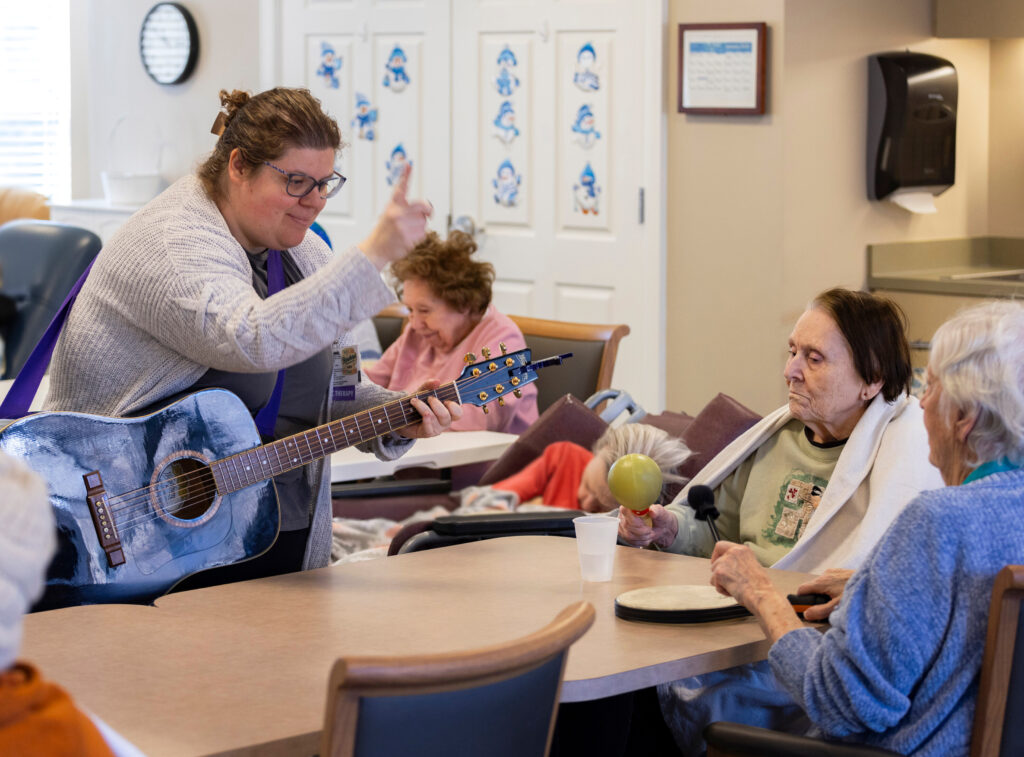
Why it matters: Music has a unique power to spark memories and soothe agitation. Familiar melodies can often trigger emotional responses or verbal expressions, even in people who struggle to communicate otherwise.
Ways music is used in memory care:
- Listening sessions with personalized playlists
- Group sing-alongs with classics and favorites
- Drumming circles or playing simple instruments
- Movement to music (e.g., clapping, tapping, gentle dancing)
What is reminiscence therapy?
Reminiscence therapy uses prompts like music, photos, or objects to encourage individuals to talk about their past. This can evoke pleasant memories, foster connection, and reinforce identity—helping seniors feel seen and valued.
FAQs About Memory Care Activities
Do memory care residents have a choice in their activities?
Absolutely. While structured programming is provided, residents are encouraged to participate based on their interests, energy level, and mood. Personal choice plays an important role in preserving dignity and autonomy.
Are group activities better than one-on-one?
Both are important. Group activities provide socialization and a sense of community, while one-on-one interactions offer comfort and focused attention—especially helpful for residents with higher levels of memory loss.
How often do activities occur?
In most memory care communities, there are daily programs scheduled throughout the day—from morning movement to evening calming routines. Activities are designed to follow a consistent rhythm to reduce confusion and create a comforting routine.
The Right Environment Matters
When thoughtfully designed, memory care activities can do more than pass the time—they can improve quality of life, reduce anxiety, and strengthen meaningful connections. A successful memory care program doesn’t just keep residents busy; it honors who they are, where they’ve been, and what brings them joy.
If you’re exploring options for memory care in Dayton, OH, Bethany Village offers a warm, supportive environment where personalized engagement is part of everyday life. Our compassionate team is here to help your loved one thrive with dignity and purpose. Contact us today to schedule a tour or learn more about our memory care services.