
Key Takeaways

  • Social connection plays a large role in the overall well-being of older adults, affecting both mental and physical health.
  • Noticeable changes in daily routines, such as eating or sleeping habits, can be indicators of loneliness.
  • A shift in mood, like a new reluctance to participate in favorite activities, is another common sign.
  • Encouraging more interaction and exploring community options can help a loved one feel more connected.

Understand the Signs of Social Isolation

You may notice subtle shifts in a loved one’s daily life. Perhaps they no longer sound as cheerful on the phone, or they turn down invitations to family dinners. These small changes can sometimes point to deeper feelings of loneliness and isolation, which can affect their health and happiness. At Bethany Village, we understand that connection is a key part of a fulfilling life.

Recognizing these changes is the first step toward offering support. Spotting changes in daily routines, mood, and social engagement are key indicators that a loved one may be experiencing social isolation. By paying attention, you can help them find new ways to connect, as senior communities can provide support through built-in social opportunities.

The Importance of Social Connection for Older Adults

Meaningful social connections are important at any age. For older adults, they can have a positive influence on both physical and mental well-being. Regular interaction lifts spirits and offers a support system during challenging times. Because feelings of loneliness can pose serious health risks, social engagement is more than just a pastime.

It’s helpful to remember that living alone is not the same as being lonely. Loneliness is a feeling of disconnection that can occur even when someone is surrounded by others. A strong social network helps combat these feelings, and the structure within some communities naturally fosters a rich and active social life.

Notice Changes in Health and Daily Routines

Sometimes, the first signs of social isolation appear in a person’s daily habits. You might notice changes in their diet, such as a refrigerator with little fresh food or a sudden disinterest in cooking. Preparing meals for one can feel like a chore, leading to poor nutrition. Learning about cooking for independent older adults can offer helpful strategies.

You may also observe disrupted sleep patterns. If your loved one mentions feeling tired all the time or having trouble sleeping, these issues can be linked to sadness from being alone. Understanding how to sleep well as you age can help you offer support.

Observe Shifts in Mood and Social Engagement

A person’s emotional state and willingness to engage with others are strong indicators of their social well-being. Pay attention to their mood during conversations. Do they seem less optimistic or more withdrawn? A lack of engagement with regular community activities is also a clear sign of struggling with isolation, which may contribute to depression in older adults.

A Reluctance to Participate

One of the most common signs is a withdrawal from activities they once loved. Your loved one may start making excuses to avoid a weekly card game, book club, or religious services. This disinterest often extends to hobbies that once brought them joy. It’s important to approach these situations with empathy.

They might also begin to feel alone or express concerns about being a burden. Listening with compassion when they share these thoughts can help you understand what they are experiencing and how you can best offer support.

Ways to Encourage More Social Interaction

Helping a loved one reconnect doesn’t have to be complicated. Small, consistent efforts can make a significant difference in their outlook. You can work together to find opportunities that fit their personality and comfort level, such as a scheduled weekly call.

Technology can also be a wonderful tool for bridging distances. Teaching a loved one how to use video chat or sharing social media tips for older adults can open up new worlds of communication with family and friends, helping them feel more included.

Consider these simple and effective ways to foster more connection:

  • Schedule regular phone calls, video chats, or in-person visits.
  • Find local community groups or clubs centered on their interests, like gardening or reading.
  • Explore transportation services that can help them attend social events.
  • Look into community living that offers built-in social calendars, such as an independent living or assisted living setting.

Create a Supportive Path Forward

When you notice signs of social isolation, a compassionate and proactive approach helps your loved one feel supported. The goal is to focus on positive solutions that enhance their quality of life while respecting their independence. Exploring different senior living options can provide an environment rich with opportunities for friendship and engagement. With planned events, shared dining experiences, and common areas for socializing, residents can easily connect with peers.

For families in the Dayton area, Bethany Village offers a retirement experience curated for connection and well-being. The community is designed to help residents thrive through a variety of activities and opportunities for friendship. You are invited to schedule a visit to learn more.

Key Takeaways

  • Begin conversations about future care before a health event occurs to reduce stress and make decisions together.
  • Discuss topics in a calm setting, focusing on your parent’s wishes for their home life, daily activities, and health.
  • Explore their preferences for future housing, from staying at home with support to moving to a senior living community.
  • Create a compassionate plan that respects their independence while providing the support they may need later.

Why These Conversations Are So Important

Thinking about a parent’s future needs can feel overwhelming. You want to honor their wishes and independence while also being prepared for what lies ahead. The team at Bethany Village finds that starting these conversations early, long before a health change requires immediate action, removes pressure from the situation. Thoughtful discussions about retirement plans, like senior living vs. aging in place, allow for thoughtful planning.

The most supportive approach is to have open, honest, and ongoing discussions that empower your parent to share their hopes for the future. This turns a potentially difficult topic into a collaborative process, giving everyone a voice and a shared understanding of the path forward.

Discuss Their Living Situation and Home Life

A great place to start is by asking about their current home. Do they feel happy and comfortable there? Talking about their living situation opens the door to discuss future possibilities in a practical and non-threatening way.

Future Housing Preferences

Ask what their ideal living situation looks like down the road. Many older adults wish to remain in their own homes, and you can discuss what support might make that possible. Others may be open to a change that offers more convenience and social connection.

You can explore different options together, such as moving to a maintenance-free apartment or cottage. Researching various senior living communities can show them the appealing lifestyle and friendship opportunities available, especially in independent living settings.

Home Safety and Comfort

If your parent wants to stay in their current home, talk about ways to make it safer and more comfortable. Simple aging-in-place home modifications can make a significant difference in their daily life. You can work together to identify areas that may become challenging over time.

Walk through the home and consider adding grab bars in the bathroom, improving lighting in hallways, or securing rugs to prevent falls and fractures. For a two-story home, you might discuss the possibility of moving their bedroom to the first floor to avoid stairs.

Ask About Daily Activities and Social Well-Being

A person’s daily routine is a large part of their quality of life. Ask your parent if there are any chores, errands, or activities that are becoming more difficult. They may welcome help with things like grocery shopping, housekeeping, or yard work.

Social engagement is also important for well-being, as social isolation can pose health risks. Does your parent have regular opportunities to see friends and participate in hobbies they enjoy? If they seem isolated, you can discuss ways to reconnect with their community. Options from respite care to assisted living can provide both practical help and a vibrant social environment.

Address Health and Wellness Questions

Health is a natural part of planning for the future. You can approach this topic with care by asking how they are feeling and what support would be helpful for them. Frame the conversation around maintaining their health and independence for as long as possible.

Current Health Management

Talk about their general health and how they manage it. Do they feel they have good communication with their doctor? You can offer to help them keep track of appointments or organize medications to make their routine simpler.

For more complex health needs, it can be comforting to know that professional support is available. Some situations may benefit from skilled nursing care or short-term rehab after a hospital stay, providing focused attention to help them recover.

Mobility and Transportation

Getting around safely is key to staying independent. If you have noticed any changes in your parent’s mobility, gently bring it up. Ask if they have any concerns about driving or if they would be open to other transportation options for appointments and errands.

Introducing simple mobility aids can also be part of the conversation. A cane or walker can provide extra stability and support when moving around. The goal is to present these tools as ways to help them continue to do the things they love.

Plan for Their Future with Compassion

These conversations are not about making decisions for your parents—they are about making decisions with them. By listening to their wishes, you can help create a flexible plan that adapts as their needs change. This thoughtful preparation can bring peace of mind to your entire family.

Knowing their preferences for everything from daily assistance to potential memory care helps you honor their legacy with dignity and respect. For families in the Dayton area, Bethany Village offers a continuum of lifestyle options designed to support older adults through every chapter.

Take the next step with confidence—start the conversation today and explore what’s possible together. When you’re ready, connect with the team at Bethany Village to learn how each stage of care can support your family’s journey.

When you think about your loved one’s retirement, you likely consider finances and healthcare. But what about their day-to-day happiness and engagement? It’s just as important for them to have opportunities for joy, connection, and purpose across various senior living options.

Modern senior living communities offer a wide range of engaging programs and community activities designed to prevent boredom and create a fulfilling lifestyle. These activities support physical, mental, and social well-being. They provide a wonderful way for your family member to thrive.

Key Takeaways

  • Staying physically active through tailored fitness classes and dancing supports overall health.
  • Social events and community celebrations help build strong friendships among residents.
  • Lifelong learning opportunities like art classes and local outings keep minds sharp.
  • Activity programs are designed to fit different lifestyles, from independent living to memory care.

Staying Active for Physical and Mental Wellness

Staying active is wonderful for both the body and mind. Regular movement can improve balance and strength, while social exercise boosts mood. A well-rounded senior living community offers many ways to keep moving.

Group Fitness Classes

Group fitness classes are a popular way to stay in shape, and many communities have a dedicated senior fitness center to host them. Options often include gentle yoga or balance training, all tailored for older adults. Exercising with friends adds a fun social element to the workout.

Dancing and Music Events

Dancing is a fantastic activity that combines physical exercise with social connection. Many communities host events with live music or offer classes in ballroom or line dancing. It’s a joyful way to move and connect with others.

Opportunities for Social Engagement and Fun

Building strong friendships is a cornerstone of a happy retirement. Planned social events provide a natural way for your loved one to connect with their neighbors. These gatherings help create a warm and welcoming community atmosphere.

Community Events and Celebrations

Activity coordinators often plan a full calendar of exciting events. These can range from holiday parties and themed dinners to birthday celebrations. These gatherings foster a true sense of community and belonging.

Welcoming Pet Visits

Many people find comfort and joy in the company of animals. Some communities incorporate pet therapy programs into their programming. These visits can help reduce stress and bring smiles to everyone’s faces.

Exploring Hobbies and Lifelong Learning

Retirement is an ideal time to pursue new interests or revisit old passions. Learning something new, like engaging in the arts, is a great way to stay mentally active and engaged. It also provides another opportunity for social connection.

Continuing Education Classes

Continuing education promotes the value of lifelong learning and can be very rewarding. Communities may offer classes on topics like history, art, or technology. These opportunities enrich the lives of residents and help them explore new interests.

Off-Site Outings and Excursions

Organized trips to local attractions are another popular activity. Residents can explore museums, enjoy a meal at a new restaurant, or take a scenic drive. Transportation is often provided, making it easy and convenient to get out and about.

How Activities Support Different Lifestyles

A well-designed activity program supports residents across various levels of care. For those in an active independent living setting, a full calendar of events provides endless opportunities for engagement. In assisted living, gentle support helps residents continue to participate in the hobbies they enjoy.

Programming is thoughtfully adapted to fit individual needs within the larger senior living community. Even those in compassionate memory care can enjoy gentle and appropriate activities that bring them comfort and joy. This approach ensures everyone can find something meaningful to do.

Discovering a Fulfilling Retirement

Modern retirement communities offer a diverse array of activities to support a vibrant and fulfilling lifestyle. Seeing these opportunities firsthand is a wonderful way to imagine the life your loved one could enjoy. It allows you to see how they can continue to grow, learn, and connect with others.

The team at Bethany Village is here to help you explore a retirement experience curated for your family member. We invite you to see our welcoming community for yourself. Contact us today to learn more or to schedule a personal tour.

Key Takeaways

  • AI phone scams use a familiar voice to create a fake emergency and ask for money.
  • Warning signs include pressure to act quickly and secretly, along with unusual requests for payment like gift cards.
  • Create a family “safe word” that only you and your loved ones know to verify a caller’s identity.
  • If you receive a suspicious call, hang up and call your loved one back on a number you know is theirs.

How AI Voice Scams Are Targeting Families and How to Stay Safe

New technology has made it easier than ever for scammers to sound convincing. While many tech gadgets for older adults are designed to help, some advancements can be used for harm. They can now use artificial intelligence to mimic the voice of a loved one, creating a distressing and confusing situation over the phone.

Protecting your loved ones involves creating a family plan, knowing the warning signs, and verifying any urgent requests for money. Awareness and simple preparations are your most effective tools against these scams.

Understanding the New Wave of Phone Scams

Scams that use artificial intelligence can mimic the voice of a family member in distress. These calls often create a false sense of emergency to trick people into acting without thinking. Knowing about these tactics helps everyone, whether they enjoy independent living or receive daily support through assisted living.

Understanding what makes these calls different can help you and your family feel more prepared. Here’s what to keep in mind:

  • These scams use a trusted voice to build immediate credibility, unlike older scams that used a stranger’s voice.
  • Simple awareness that this technology exists is a powerful defense against being caught off guard. As technology evolves, it is important for everyone to stay vigilant against potential threats.
  • Staying calm and thinking clearly are important if an urgent and emotional call comes in.

Common Warning Signs of an AI Scam Call

Recognizing the signs of a fraudulent call is the first step toward safety. Here are a few things to listen for when you or a loved one receives an unexpected, alarming phone call.

An Urgent and Unexpected Request for Money

Scammers often create a story about a car accident, a legal problem, or a medical issue. They will almost always ask for money to be sent quickly. The payment methods they request—like wire transfers or gift cards—are often difficult to trace. Learning to recognize the common patterns in these scams can prevent significant financial loss.

A Familiar Voice in an Unfamiliar Situation

The voice on the phone may sound just like your loved one, but the story they tell might seem confusing. The call quality may also be poor. This is sometimes done on purpose to hide imperfections in the AI-generated voice.

Pressure to Act Immediately and in Secret

A scammer will insist that you act now and tell you not to speak with anyone else. This tactic is used to prevent you from taking a moment to verify the story. They want to create panic so you don’t have time to think logically.

Simple and Proactive Ways to Stay Safe

Having a plan in place can make all the difference when a suspicious call arrives. These simple steps can help you and your family members avoid falling for a scam. These conversations are helpful for any older adult in your life, as open discussion is an important part of planning for a parent’s future well-being.

  1. Create a family safe word. Choose a unique word or phrase that only your family knows. Agree to ask for it if you ever receive a suspicious call asking for help.
  2. Discuss these scams openly. Talk with your loved ones about AI voice scams. Knowing these tactics exist makes it much easier to recognize them if a call happens.
  3. Call them back on a known number. Encourage the habit of hanging up and immediately calling back on a trusted number to confirm the story.

What to Do During and After a Suspicious Call

If you or a loved one receives a call that feels off, here are the steps to take. It’s always okay to end a call that makes you uncomfortable. You do not need to be polite to a potential scammer.

  • Do not share information. Avoid giving out personal details like addresses, bank account numbers, or passwords over the phone.
  • Hang up the phone. If you feel pressured or unsure, the best action is to end the conversation right away.
  • Verify the story independently. After hanging up, contact your loved one directly using a phone number you know is theirs.
  • Report the attempt. Report the fraudulent call to the Federal Trade Commission (FTC) to help protect others in your community.

Fostering a Safe and Supportive Environment

Ongoing communication is a powerful tool against fraud. By talking about these topics openly, you build a strong foundation of awareness and trust with your loved ones. This vigilance helps create a secure atmosphere within any senior living community.

Keeping family members informed supports their well-being and peace of mind. This is an important part of caring for individuals who may need memory care, skilled nursing, or even short-term rehab. These conversations strengthen your family’s ability to navigate challenges together.

At Bethany Village, we believe in supporting the whole family with compassion and care. If you have questions about our community, contact us to learn more or schedule a tour of our Dayton campus.

Imagine a lifestyle where you have more time for your passions, friendships, and wellness. You can leave behind the worries of home maintenance, like mowing the lawn or fixing a leaky faucet, and focus on an active, connected, and fulfilling lifestyle. That’s what life is like in independent senior living: spending your time, your way.

At its core, independent living includes a private home within a welcoming community, along with services and amenities that make life easier. Residents typically enjoy maintenance-free living, shared spaces, and optional social opportunities. Daily tasks like housekeeping and transportation are often handled for you, which gives you more time to spend on the things you love.

Key Takeaways

  • Independent living offers older adults a private home within a community that removes the burden of home maintenance and daily upkeep.
  • Residents can enjoy dining options that simplify everyday routines without limiting independence.
  • Communities are designed to balance privacy with access to shared amenities such as fitness spaces, walking paths, and gathering areas.
  • Independent living supports flexible lifestyles, allowing residents to choose how they spend their time each day.
  • Social opportunities are available through casual interactions, organized events, and interest-based groups, all on a voluntary basis.
  • This lifestyle is well-suited for active older adults who value comfort, convenience, and personal choice.

What to Expect in Independent Living

Independent living is designed for older adults who want to continue living life on their own terms. It combines the privacy of your own residence with the social and practical benefits of a larger group. It’s about having support nearby while maintaining the life you love, with no demands or requirements about how you spend your time.

Day to day, independent living removes many of the responsibilities that come with owning a home. Yard work, repairs, and many routine chores are handled by the community. This creates more time for hobbies, socializing, relaxation, or simply enjoying a predictable, manageable routine.

In independent living, you can enjoy quiet time at home or spend time in shared spaces with neighbors. This lifestyle supports personal choices while making everyday life easier and more comfortable for every resident.

The Benefits of Independent Senior Living

Independent senior living is built around comfort, convenience, and choice. Each of these communities supports daily routines while offering opportunities for connection and engagement.

Private Homes Without the Work

Residents enjoy their own private living spaces, such as apartments, cottages, or villas. Home maintenance, repairs, and exterior upkeep are handled by the community. This allows residents to enjoy their home without the ongoing demands of ownership, which makes life more comfortable and enjoyable.

Built-In Amenities That Support Daily Life

Independent living communities typically include shared amenities that support an active lifestyle. These may include dining venues, fitness spaces, walking paths, libraries, and comfortable gathering areas. Amenities are designed to be easily accessible and simple to use, so every resident can enjoy their favorite programs and activities.

Services That Simplify Your Routine

Many communities offer services that reduce daily to-do lists. Housekeeping and scheduled transportation help residents stay focused on what matters most. These services add convenience without limiting independence.

A Community Designed for Ease and Comfort

Layouts, common areas, and outdoor spaces are designed with older adults in mind. With wide walkways, clear signage, and inviting shared spaces, the community makes it easy to move around and feel at home. The environment supports comfort without feeling clinical.

Social Opportunities in Independent Living

One significant benefit of life in independent living is the social aspect. Every community offers unique activities, events, and programs to help residents bond with one another.

Everyday Opportunities to Connect

Shared dining areas, lounges, and outdoor spaces encourage casual conversation and connection. Residents often enjoy spontaneous interactions that come from living in a shared environment.

Organized Activities and Events

Many communities offer planned events, classes, and group outings. These activities provide structure for those who enjoy a full calendar while remaining optional for those who prefer quieter routines.

Shared Interests and Community Groups

Interest-based groups allow residents to connect around hobbies, learning opportunities, or creative pursuits. These groups help foster familiarity and a sense of belonging within the community.

Is Independent Living the Right Choice for You?

Independent living can be a good fit for older adults who want fewer home responsibilities and more time to enjoy daily life. It offers a balance of privacy, convenience, and optional connection. For those who value social opportunities, a life full of convenience, and a beautiful place to live, independent living is likely the right choice for you.

If you’re thinking about independent living, we can help. Here, we support an active, comfortable lifestyle in a welcoming community setting. That’s the life you deserve, and the one waiting for you in our community at Bethany Village. Schedule a tour today to come discover your new home!

Aging is a natural part of life. It brings about plenty of new changes, both physical and mental. In fact, at a certain age, the terminology itself can shift. Planning ahead is key to making sure you get the future care you deserve. So what age defines a senior citizen, and how can embracing this be beneficial?

A senior citizen is typically defined as someone aged 65 and older. This is the age referenced by programs like Medicare, retirement benefits, and more. However, this term does vary based on legal, societal, and regional perspectives.

What Defines Senior Citizenship in Ohio?

First, the term “senior citizen” does vary significantly. Location is one of the most important factors here. The general term defines “a person over the age of 60 or 65”, especially someone who is no longer employed.

However, when it comes to legal—and societal—definitions, this becomes more complex.

The Legal Definition of a Senior Citizen

From a legal perspective, many states use the term “senior citizen” to define eligibility for most benefit programs. This includes Social Security and Medicare. Though other factors are at play, both these programs consider 65 to be the average baseline age.

Though you can sometimes claim benefits earlier, they’re often reduced before 65. Other programs, like senior living communities or senior benefit discounts can vary, and may offer support to adults as young as 62.

These distinctions depend on the specific services offered or the organization. If you’re ever unsure, contact the party in question for clarification.

The Societal Definition of a Senior Citizen

Societal definitions of senior citizenship are much broader. These tend to go beyond just age—plenty of factors are involved.

Typically, most areas define a senior citizen by:

  • Their eligibility for retirement benefits or pensions
  • Their participation in senior-specific community programs or activities
  • Whether they receive or qualify for age-related discounts or benefits

Cultural differences also shape what it means to be a senior. At the end of the day, a person can decide for themselves whether to refer to themselves as a senior citizen.

The Benefits of Senior Citizenship

Reaching senior status opens the door to a wide range of benefits. These include financial perks, healthcare services, and even lifestyle adjustments designed to make retired life manageable and enjoyable. Seniors in Ohio, for example, have access to programs:

  • Discounts on dining, shopping, and public transportation.
  • Eligibility for Medicare and other senior-specific healthcare options.
  • Free or discounted access to certain recreational activities and social centers.
  • State property tax reductions for senior homeowners.
  • Senior-specific community programs designed for connection and well-being.

By taking advantage of these offerings, older adults—and their loved ones—can enjoy added support in their everyday lives.

Medicare Eligibility at 65

To qualify for Medicare in Ohio, most residents become eligible at age 65, provided they are U.S. citizens or legal residents who have lived in the country for at least five years.

There are multiple enrollment windows, so age 65 is the essential time for Ohioans to evaluate their options and secure their future healthcare coverage. More information on coverage can be found here.

Easing the Transition to Senior Living

Senior living communities are a great way to simplify life and move to a warm, welcoming community.

However, the move to senior living is a big step—both emotionally and physically. If you’re considering recommending senior living to a partner or loved one, you may need to approach the conversation with care and consideration.

Starting the discussion sooner rather than later can pave the way for smoother decision-making. It helps to:

  • Highlight the benefits of senior living, from aging in safety to social opportunities.
  • Listen to their concerns and questions with patience.
  • Share information about different communities and continuing care options.
  • Visit communities together to explore what feels right.

It’s essential to remember this is a significant change. It’s likely going to take some time for your loved one to come around to the idea. Focus on the benefits and potential improvements, and this conversation should go smoothly.


Find Your Future Home With Us

Being a senior citizen is a great thing. It’s a chance to slow down and enjoy everything life has to offer. From all kinds of benefits to access to unique, personal communities, becoming a senior can be extremely rewarding.

Here at Bethany Village, we take pride in offering a true home to older adults, complete with scenic city views. As a continuing care retirement community, we offer plenty of lifestyle options to help you enjoy every day. Discover everything we have to offer – explore the neighborhood today!

Music therapy programs are a vibrant part of life in various settings, where a board-certified music therapist guides residents through music experiences to support their health and quality of life. This can be especially meaningful in communities offering assisted living or specialized memory care. It is a recognized profession with its own practice standards, and we are proud to celebrate the professionals in this field.

Key Takeaways

  • Music therapy is a planned therapeutic process that uses music experiences such as singing, instrument play, improvisation, songwriting, movement and receptive listening to address physical, cognitive, and emotional needs through assessment, treatment and evaluation.
  • Listening to or creating music to express oneself can help reduce stress and calm feelings of anxiety in older adults.
  • It can also help with communication and cognitive function, particularly for individuals in memory care, to make choices – giving them a sense of purpose.
  • Group music therapy sessions encourage social connection and physical movement, which contribute to overall well-being.

Discovering the Power of Music

We all know the feeling of a favorite song lifting our spirits or bringing back a cherished memory. During Music Therapy Month, we recognize how music can be used in a structured way to support older adults. This approach supports well-being and addresses challenges related to aging.

What Does Music Therapy Involve?

Music therapy is more than just listening to the radio or singing along to familiar tunes. It uses specific music experiences led by a licensed professional to help individuals achieve certain therapeutic goals. This approach is tailored to meet each person’s individual needs and preferences.

A music therapist might use singing or lead a progressive muscle relaxation to help someone relax and manage stress. They could also use different rhythms as well as pitch and vocal techniques to help a person with speech difficulties communicate. The focus is always on using music to improve a person’s quality of life.

How Music Supports Mental and Emotional Health

Reduces Feelings of Stress

Some older adults experience significant stress and tension. Listening to calming music can help slow a fast heart rate. It can also help lower levels of stress hormones in the body.

Additionally, in a music therapy program, a music therapist might select resident-preferred songs with gentle rhythms or soundscapes. The lyrics and themes can also be chosen to help people feel more relaxed and verbally process experiences. This can create a peaceful and soothing atmosphere.

Improves Cognitive Skills

Music therapy is often part of a comprehensive care plan for individuals requiring memory care. It may help retain speech skills. Sometimes, music can even encourage a nonverbal person to hum or sing along.

Research has shown that music stimulates the brain by activating multiple areas in both hemispheres, including those responsible for emotions, memory, and motor function, which can lead to increased cognitive function, emotional responses, and even physical health benefits  such as supporting blood flow.. The experience is both engaging and beneficial for residents.

How Music Encourages Physical and Social Activity

Inspires Movement

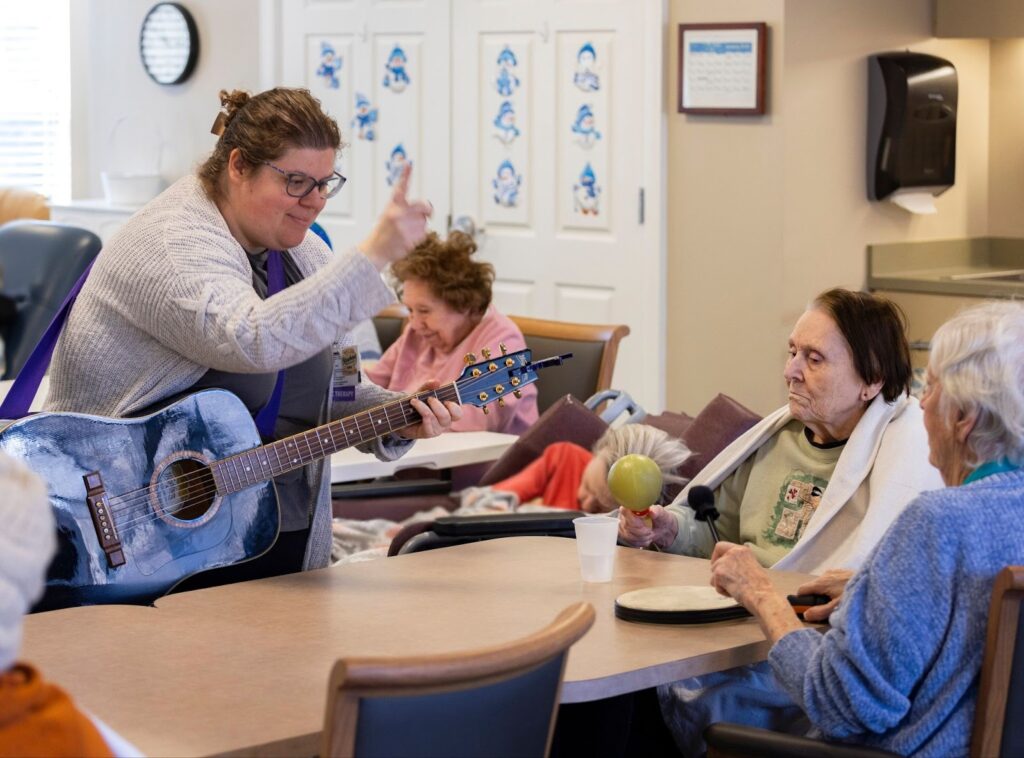
Upbeat music can motivate older adults to engage in physical activity. This might mean dancing, clapping their hands, or just tapping their toes to the beat. Structured movement and utilizing handheld instruments are positive forms of utilizing gross and fine motor physical activity. Instruments such as drums, tambourines and shakers provide opportunities for participants to make their own music and express themselves as well as feeling grounded and vibrotactile stimulation.  It is a fun and interactive way to stay mobile.

Increases Social Connections

Music has a natural way of bringing people together. During group music therapy, older adults can connect over a shared interest in music or life experiences. This experience often leads to new and lasting friendships.

The social side of music therapy helps reduce feelings of loneliness or isolation. It provides a sense of community and belonging. This is a crucial aspect of well-being in any senior living environment.

Music Therapy Across Different Levels of Care

Music therapy is adaptable and offers support in many different living situations. For individuals in independent living or assisted living, it can be a great way to stay social and engaged. It can also serve as a comforting presence for those who need more support.

In communities offering short-term rehab or skilled nursing, music can help people manage discomfort and identify coping skills. It can also motivate them during other forms of therapy. For those who require compassionate support, music can offer a profound sense of calm and normalization for residents and their loved ones.

Learn More About Supportive Programs at Bethany Village

Enriching programs, such as music therapy, can have a profound impact on the mental, physical, and emotional well-being of older adults. Finding a community that offers a variety of engaging activities is a high priority for many families. At Bethany Village, we offer these programs to foster a vibrant and supportive atmosphere that enables individuals to thrive.

If you are exploring care options for a loved one, we invite you to see our community for yourself. Learning about the day-to-day life and activities available can help you in your search. We are happy to answer your questions and share what makes life here so fulfilling.

Contact us today to schedule a personal tour and learn more about our supportive lifestyle options.


As winter settles in, staying well becomes a top priority. Colder weather often means less time outdoors, changes in routine, and increased exposure to seasonal illnesses. This is when a proper diet becomes so important for older adults, because it supports energy levels, strength, and overall health throughout the season.

Five immune-boosting foods for seniors include:

  • Citrus fruits
  • Eggs
  • Blueberries
  • Ginger
  • Chicken soup

Key Takeaways

  • Winter can disrupt daily routines for older adults, making nutrition an important part of overall wellness.
  • Certain foods, including citrus fruits, eggs, blueberries, ginger, and chicken soup, provide nutrients that support the body’s natural defenses.
  • Consistent, balanced eating habits matter more than focusing on any single food or ingredient.
  • A well-rounded diet supports energy levels, strength, and long-term health throughout the colder months.
  • Wellness is supported by more than nutrition alone, including movement, routine, and access to supportive services.

Why Nutritious Foods Matter During Colder Months

Focusing on nutrition is part of a broader approach to wellness that supports independence and daily comfort.  However, colder months often change daily habits, from activity levels to eating patterns. For older adults, maintaining steady nutrition during this time supports energy, strength, and resilience. Regular meals that include a variety of nutrients help the body function at its best, even when routines shift.

Nourishing Foods to Support Your Immune System

Certain foods are especially helpful during winter because they provide nutrients that support the body’s natural defenses. These ingredients are easy to find, simple to prepare, and versatile enough to enjoy in many meals. Adding them regularly can help support wellness throughout the colder months.

Citrus Fruits

Citrus fruits like oranges, grapefruits, and lemons are known for their vitamin C content, which supports immune function. They also help with hydration, which can be harder to maintain during winter. Citrus fruits are easy to enjoy as snacks, in salads, or added to warm beverages, and their bright flavor makes meals feel fresher when seasonal options are limited.

Eggs

Eggs provide high-quality protein, which helps support muscle strength and overall health. They’re also a natural source of vitamin D, a nutrient many older adults lack during winter due to reduced sunlight. And because eggs are easy to prepare, their versatility makes them a reliable staple for meals at any time of day.

Blueberries

Blueberries contain antioxidants that support overall wellness and help protect cells from everyday stress. They’re easy to add to oatmeal, yogurt, or smoothies, and their frozen variant can be found year-round. This makes them a convenient option for adding nutrients without changing meal routines.

Ginger

Ginger is known for its anti-inflammatory properties and its ability to support digestion. It also provides a warming quality that many people find comforting in colder months. It can be added to soups, teas, or cooked dishes for flavor and balance.

Chicken Soup

Chicken soup offers hydration, protein, and warmth, all of which are helpful during winter. It’s easy to eat when appetite is lower, and it provides gentle nourishment. The combination of broth, vegetables, and protein supports overall health, so this meal remains a dependable option.

The Importance of a Consistent and Well-Balanced Diet

While individual foods are helpful, consistency matters most. A well-balanced diet that includes fruits, vegetables, lean proteins, whole grains, and healthy fats supports long-term wellness. Regular meals help maintain energy levels and reduce the risk of nutritional gaps.

Rather than focusing on one ingredient, building steady eating habits creates a stronger foundation for health. This approach supports daily comfort and helps older adults maintain routines that feel familiar and manageable.

How Senior Living Options Support Healthy Eating

Planning, shopping, and preparing meals every day can become a challenge. This is where a senior living community can provide vital support by offering regular, well-planned dining options. This consistency makes it easier for residents to enjoy balanced meals without the stress of planning or cooking.

How Senior Living Supports Wellness Year-Round

Wellness is best supported by consistency, balance, and routine. So, senior living communities take a holistic approach to nutrition. Rather than focusing on individual meals, they create an environment where healthy eating is built into everyday life.

Communities like ours offer:

  • Fitness and movement programs that support strength, balance, and mobility
  • On-site therapy services that help older adultss maintain physical function
  • Daily routines that promote structure and reduce stress
  • Access to supportive care services as needs change
  • Community amenities that encourage activity and connection
  • Thoughtfully planned dining that complements an active lifestyle

Together, these elements create an environment where wellness is supported throughout the year, not just during the winter months.

Discover a Lifestyle Focused on Wellness

A satisfying meal is one of life’s simple pleasures. At Bethany Village, we believe that delicious food and good nutrition are central to a fulfilling lifestyle. Our culinary team is dedicated to creating varied and appealing menus that nourish the body and spirit.

Our community helps residents enjoy meals that are both comforting and delicious. To learn more about how we support healthy living through every season, schedule a visit today!

Finding a meaningful holiday gift for a loved one living with Alzheimer’s or dementia can feel overwhelming. Traditional gifts don’t always land the same way, and that’s okay. What matters most is choosing something that brings comfort, familiarity, and a sense of connection.

5 thoughtful holiday gift ideas for someone with dementia include:

  • Tech-related gifts that encourage familiarity
  • Personalized comfort and care gifts
  • Sensory and creative gifts for calm engagement
  • Cozy everyday gifts that promote relaxation
  • The gift of your time and presence

Key Takeaways

  • Dementia-friendly holiday gifts are most meaningful when they focus on comfort, familiarity, and emotional connection rather than novelty.
  • Simple, easy-to-use technology like digital photo frames or music players can help reinforce recognition without causing frustration.
  • Personalized comfort items and sensory-based gifts can provide reassurance and help reduce anxiety.
  • Cozy, everyday items that support warmth and routine are often appreciated and used regularly.
  • Time spent together—listening to music, sharing photos, or sitting quietly—can be the most valuable gift.

Gift Ideas to Inspire Joy and Connection

Thoughtful gifts for someone with dementia are less about impressing and more about supporting emotional well-being. So, try focusing on familiarity, comfort, and shared experiences.

Tech-Related Gifts That Encourage Familiarity

Simple technology can be surprisingly comforting when it’s easy to use and tied to familiar faces, sounds, or routines. Passive tech works best because it helps your loved one enjoy it without needing to learn something new or make decisions.

Here are a few tech-related gift ideas to consider:

  • Digital photo frames that rotate familiar family photos
  • Simple music players preloaded with favorite songs
  • Tablets set up only for viewing photos or short videos

These gifts can gently reinforce recognition and connection without adding frustration or confusion.

Personalized Comfort and Care Gifts

Personalized gifts show thoughtfulness and attention to your loved one’s preferences. Items tied to routine or familiar comforts can help them feel safe and understood, even as cognitive changes progress.

Some meaningful comfort-focused gift ideas include:

  • Customized care packages with favorite snacks or teas
  • Familiar lotions, soaps, or grooming items with preferred scents
  • Small keepsakes like notes, cards, or drawings from family

Personal touches remind your loved one that they are known, cared for, and valued.

Sensory and Creative Gifts for Calm Engagement

Sensory experiences can be grounding for people living with dementia. Gentle, hands-on activities often provide comfort without requiring complex thinking or memory recall.

Consider sensory or creative gifts such as:

  • Art supplies for simple drawing or painting
  • Large-piece puzzles designed for easy handling
  • Soft fidget items or textured blankets

These gifts encourage quiet engagement and can help reduce anxiety during moments of restlessness.

Cozy Everyday Gifts That Promote Relaxation

Comfort-focused gifts support daily well-being and can be enjoyed repeatedly. Items that promote warmth, safety, and physical ease are especially appreciated during the winter months.

Some cozy gift ideas include:

  • Soft throw blankets for naps or quiet evenings
  • Non-slip slippers or socks
  • Comfortable clothing designed for easy wear

Everyday comfort can make routines feel calmer and more predictable.

The Gift of Your Time and Presence

Above all else, your presence is often the most meaningful gift. Shared moments don’t need to be elaborate to matter—they simply need to feel calm and attentive.

Ways to give your time as a gift include:

  • Listening to familiar music together
  • Looking through photos or memory books
  • Sitting quietly and talking, or simply being together

Consistency and connection matter far more than perfection.

Recognizing When Your Loved One May Need More Support

The holidays often bring families together, sometimes for longer visits than usual. During this time, you may notice changes in your loved one’s safety, routines, or ability to manage daily tasks. These observations can be difficult but important.

If you notice significant changes in your loved one’s cognitive status, don’t ignore them. Instead, it’s likely time to explore a move to memory care.

What Is Memory Care?

Memory care provides specialized support for those in need. When cognitive conditions like dementia and Alzheimer’s disease are at play, this lifestyle can offer customized care to your loved one. These communities offer structured routines, safety-focused environments, and caregivers trained to support cognitive changes with compassion and consistency.

Give Them the Gift of a Supportive, Loving Community

This holiday season, focus on what brings your loved one comfort and happiness. Whether through a thoughtful gift, meaningful time together, or planning for their future well-being, every act of care matters.

Choosing memory care can be one of the most meaningful gifts you give your loved one. It offers stability, routine, and a team of professionals who understand the unique challenges of dementia care. And here at Bethany Village, we’re ready to welcome your loved one home. Schedule a tour of our community today, and we can work together to make this season one to remember.

Key Takeaways

  • Senior living communities provide multiple levels of support on one campus, including independent living, assisted living, and memory care.
  • Major benefits are the convenience of a maintenance-free home, built-in social connections, and access to future care if needs change.
  • Practical considerations include understanding the financial structure and finding a community culture that matches your loved one’s personality.
  • Making an informed decision involves open family conversations and visiting different communities to get a feel for the environment.

What Do Retirement Villages Offer Residents?

Modern retirement communities offer more choices for older adults than ever before. These communities provide a variety of lifestyle options, from active and independent to more supportive care. So, if your loved one is considering life in a retirement village, it helps to learn more about both the benefits and the practical considerations.

The advantages of a retirement community include:

  • Maintenance-free living
  • Built-in social opportunities
  • Access to a continuum of care
  • A safe and supportive environment
  • Amenities designed for daily convenience

What Is a Modern Retirement Community?

A modern retirement community brings independent living, assisted living, and memory care into one campus. This allows residents to enjoy an active lifestyle today while having supportive options available if their needs shift. The goal is to simplify everyday life through thoughtful amenities, maintenance-free living, and accessible care.

While life in a retirement village can be a wonderful choice, it’s not the only option. Some older adults prefer aging in place, an option built around staying home. This can offer independence and privacy alongside a sense of control, but it isn’t always the best choice for older adults.

The Benefits of Aging in Place

Aging in place offers a chance to:

  1. Stay in a familiar home and neighborhood
  2. Preserve control over daily routines and personal preferences
  3. Keep control over household decisions
  4. Maintain your privacy and independence

These are attractive options for many older adults.

The Cons of Aging in Place

While aging in place can be rewarding, it’s not ideal for everyone. It comes with challenges such as:

  • Managing household maintenance and unexpected repairs
  • Handling daily tasks like cooking, cleaning, and transportation
  • Navigating safety concerns, especially when living alone
  • Facing limited social interaction or fewer opportunities for connection
  • Higher financial concerns, as you need to pay for everything yourself

These factors often lead families to explore life in a retirement community.

The Benefits of Living in a Retirement Village

Retirement communities combine comfort, convenience, and a sense of security for older adults. When the right fit is found, daily life becomes easier, more enjoyable, and less centered on household responsibilities.

Maintenance-Free Living

A maintenance-free lifestyle is one of the biggest advantages of retirement living. Home repairs, yardwork, and seasonal upkeep are handled by the community, allowing your loved one to focus on hobbies, visits with family, and activities they enjoy. This simpler approach to daily living often brings peace of mind to everyone involved.

Built-In Social Opportunities

Social connection plays a meaningful role in healthy aging. Retirement communities naturally encourage interaction by offering group dining, clubs, classes, and outings. With neighbors close by and activities designed for older adults, it becomes easier to form friendships and stay engaged throughout the week.

Access to a Continuum of Care

Many retirement communities provide independent living, assisted living, skilled nursing and memory care on the same campus. This setup allows people to receive additional support if their needs change—all while staying in a familiar setting. For families, this continuity can make future planning feel more manageable.

A Safe and Supportive Environment

Safety features, on-site staff, and thoughtfully designed spaces offer comfort for older adults who may have concerns about living alone. Having help nearby can reduce stress for both residents and family members, especially when support is needed unexpectedly.

Amenities Designed for Daily Convenience

Modern retirement communities offer conveniences that make each day easier, such as housekeeping, transportation, fitness programs, and dining options. These amenities support a more relaxed lifestyle and simplify the daily tasks your loved one manages on their own.

What to Think About When Choosing a Retirement Community

Finding the right community involves a balance of practical considerations and personal preferences. It helps to sit down with your loved one and talk openly about the future.

Planning for Future Care Needs

Even if your loved one is fully independent today, it’s helpful to understand how a community supports residents as their needs evolve. Ask about assisted living, memory care, and any higher-level support offered on campus, so your family can plan confidently for the years ahead.

Considering Location and Surroundings

Families often look for communities close to familiar neighborhoods, medical providers, town attractions, or special places their loved one enjoys visiting. A convenient location can help maintain regular routines and make family visits easier.

Touring the Community Together

Seeing a community in person is one of the best ways to make an informed decision. Take time to visit common areas, look at available floor plans, and ask questions about staffing, dining, and care options. Observing how residents and team members interact can provide helpful insight into the environment.

Evaluating Lifestyle and Daily Rhythm

Every community has its own personality. Touring different locations can help you understand the pace, atmosphere, and daily activities offered. Look for a community where your loved one feels comfortable, welcome, and able to participate in activities they enjoy.

Understanding the Financial Model

Independent living is often paid for privately. Most communities use a combination of an entrance fee and monthly fees to cover items such as utilities, home maintenance, groundskeeping, transportation, fitness center membership, dining services, and more. Comparing these costs with homeownership expenses can help families better understand long-term value.

A Supportive Future Is Within Reach

Choosing a retirement community is a meaningful decision, and taking time to understand the benefits, daily lifestyle, and long-term support options can help your family move forward with confidence. When you focus on what matters most—comfort, connection, and a place that feels right—it becomes easier to find a community where your loved one can feel at home.At Bethany Village, families across the Dayton area find a warm environment, thoughtful services, and multiple levels of care on one campus. Our team is here to answer questions, walk you through living options, and explore what feels like the best fit for your loved one. Schedule a personal tour today and let us show you how we support each resident with comfort and care.